Pharma Strategy Blog

Commentary on Pharma & Biotech Oncology / Hematology New Product Development

Posts from the ‘Cancer Patients’ category

For as long as anyone can remember, humanity has wondered, “Why do we do things even when we know we should not?”

James Shelley, Caesura Letters

Akrasia is a rather common affliction in Pharma and Biotech.  After all, why do so many companies fall into the deathly trap of running generic catch-all studies in heterogeneous cancers without an oncogenic target or validated biomarker? Or even specific, well defined subsets to improve the homogeneity ratio?  Or perhaps they knowingly underpower a randomized trial for overall survival?

The list goes on…

Later, senior executives predictably scratch their heads bemusedly when the results come in — and they’re not what they hoped for, or were expecting. No one stopped to ask the obvious question – how can you hit a target you don’t have?

A head-desk kind of moment to be sure.

Hope is not a viable strategy in this business. It’s simply too expensive to shackle the odds against you in the face of intelligent analysis or solid evidence.

That said, rather than rant about this (again), I wanted to take a look and explore R&D and oncology drug development in a more positive light. There are plenty of succeses that have either made it to market or are very close in phae III development in oncology and hematology. It’s always a pleasure to find enlightened and intelligent souls in this realm, people with clarity of vision and a driving passion to get things done right.

I was really thrilled to meet one such person at the American Society of Hematology (ASH) meeting in New Orleans recently in person.

gallagher_bioDr Carol Gallagher, the former CEO of Calistoga and now VC Partner at Frazier Healthcare was truly a delight to chat with. Many of you will recall the stunning early data for what was then CAL-101 (now idelalisib), a PI3K-delta inhibitor in hematologic malignancies such as B cell lymphomas and leukemias (indolent NHL and CLL). They were the first to demonstrate the proof-of-concept for the target and published early clinical results that got people’s attention.

Rather than describe an interview – it was more like a fireside chat between two people with a similar vision – I wanted to share some of the ideas we discussed in New Orleans. The parallels between our experiences with idelalisib and imatinib were quite striking to me… From the central focus on the science and the patients, to the carefully thought out clinical program development etc… only to end up with a sudden realisation that you’ve both gone through similar experiences, with an identical philsophy; “what you too?!” is both pleasant and unnerving at the same time!

Pharma Strategy Blog: One of the things that I was interested to learn is what is your general philosophy with R&D? Strategically, what are you trying to accomplish?

Dr. Gallagher: I think we are at a moment in time that I feel fortunate to be part of where the last 20 to 30 years, we’ve had a much better molecular understanding of what drives the cancer cell. What I’m particularly fascinated with is I think we’re getting even more of an understanding of how that cancer cell is interacting with its environment and the immune system and, of course, as evidenced by PD-1 and the PD-L1, it’s fascinating to now think about that interaction. This has given us a lot of opportunities to think about specific molecular targets that could be drugable, and that could be either a small molecule or antibody, depending on, of course, where the target is, and how we’re thinking about drugging it. That (concept) has changed everything, because we can be more specific in our targeting versus giving people poison.

I think that it’s certainly an efficacy story, but it’s actually a quality of life story. I don’t mean by that registrationable endpoint of quality of life, but I do mean it in the sense of when you’re diagnosed with cancer, don’t you want to try to find a way to manage that disease, but in a way where you could still see your grandchildren or make your daughter’s high school graduation? Certainly, chemotherapy agents have been quite effective. In breast cancer, where it’s a very chemo-responsive disease, it’s hard to imagine that it’s completely going away, but can we find opportunities to give patients therapies that might be more consistent with a good life experience as well as treating their disease?

I was fortunate, for a brief amount of time in my career at Agouron to actually work in the HIV space in those early days of HIV treatment and the protease inhibitors. That was what enabled new products to come very quickly and take over space was that the opportunity to improve the adverse event profile was significant, even though, of course, just even getting the disease treated initially was a major step, but then we were able to actually rapidly, through the industry, improve upon the overall experience for those patients. I think we’re still trying to do that because when you’re living with the disease in a more chronic way, you want to be able to have better therapies.

I have to say the important thing is to focus in on each cancer type because they are all different. I think that the Gleevec example was something we majorly needed for those patients. Now, actually, interestingly, we’re having to manage that, wow, they’re actually living long enough of a time to now have mutations emerge where before, we were just focused on giving them some additional time, and so it’s really great that we’re transitioning.

I saw that too. I worked on Rituxan for a few years at Idec managing that relationship with Genentech, and this was in the early 2000s. What I started to appreciate – that I think has played out in CLL and indolent NHL – is these patients actually do live a fairly long time from the time of diagnosis. It really does matter how much the adverse event profile plays into your life, which is why lots of people would end up choosing single agent Rituxan even though we knew that Rituxan plus chemo would give you more efficacy, but they were choosing no chemo for the quality of life types of aspects of it; again, not meant as a registration endpoint but more of just how you feel every day.

I think that’s where today in R&D, we have to think about the targets but also the patient and their specific disease, and how do we give them true clinical benefit, which is not just efficacy, it’s how do we make their life experience with this disease hopefully better or not so interrupted by having cancer?

Pharma Strategy Blog: I learned that a lot from the Gleevec patients who had advanced. Some of them had six months, if that; maybe some of them had a year. I would go to visit the investigators, and sit in the clinic, and talk to the patients first, and see the PIs at the end. One didn’t want to see them in the middle and get preferential treatment over the patients, but it was a wonderful experience to talk to them, to learn about what is it really like to live with CML or whatever.

Some of them would open up—one lady, she told me she had already booked her funeral! I didn’t know what to say to that and she said, “I want to live long enough to make my daughter’s wedding.” It was six months hence. I found out afterwards from the doctor, “If she gets in the trial, she might live six months. It will be touch and go.” She’s still alive today, and that was 2000, probably 1999/2000, and you start to think about that. Wow, she’s living ten, 11, 12 years for a disease that previously, you had maybe, at the outset, a year.

The other side of this, you don’t necessarily think about at the time, is exactly what you’re saying, is if you turn an acute disease into a chronic one, they have to live with those side effects. We all know the TKIs and antibodies, if you take them for a long period of time, you’re going to have side effects. Some of that aspect of it, and you can see it in CLL with the FCR vs FC or BR in the German trials, where they can argue as long as they like that one is better than the other. But when you look at the side effects and how long patients are getting the side effects, often months afterwards, you can see why patients would choose to take single agent rituximab and feel okay. They might feel a little tired, but they’re not going to get horrible side effects, and I think that’s one of the things that we’re seeing more of in CLL. You can almost imagine with the new CLL11 study that many of these patients with co-morbidities will choose obinutuzunab alone over the combination with chlorambucil, irrespective of the label.

This morning, I went to the ASH press briefing and they had – I still think of it as CAL-101 – they had the idelalisib data, and it looked pretty impressive, but the side effect profile was also, I thought, quite impressive. Patients weren’t having a lot of the dreaded GI effects like nausea, vomiting, diarrhea etc, you could imagine that they’re not distressed and chained to the bathroom. It’s a huge difference.

Dr. Gallagher: Particularly, with that being a patient population where the average age at diagnosis is, I think, 75, and so we’re not talking about a 40-year-old person. We’re talking about a person who likely has other co-morbidities that are challenging for their daily life and to be able to do that.

It was interesting, when we first started thinking about that combination, having worked on Rituxan, I was interested to think about would there be—could idelalisib have enough activity in CLL to be close to a combination that would be R-chemo? That was really our hope, in the sense that then people would have an option—at least earlier in the progression of their disease—that might not be so toxic or causing just daily living skills to not be as easy to do. Is that an opportunity that we actually could see? Of course, the nature of the leukocytosis that is caused where we’re pushing those cells into the blood, we saw early on in the combination work, exploratory work that we did that when you put that with Rituxan, it just cleared everything rapidly. Of course, Rituxan is known that it doesn’t work that well in the lymph nodes in CLL. It is a more peripheral active drug, so it just seemed like an interesting combination to put together.

I have to say my own personal hope was this idea that maybe we could give people a pretty still efficacious option that would then say, “Well, maybe we could wait to do the more toxic things like FCR or even BR.” Bendamustine has its own set of challenges, given that these patients do unfortunately relapse over and over, that could we give them an option? I have to say I was thrilled that the outcome of that trial does actually have a survival benefit even. That makes me believe that we really are going to change the opportunity for those patients to have effective therapy that also allows them to hopefully have a little bit more normal life, not that there aren’t adverse events with these drugs, there certainly are, but I think in comparison, they’re manageable.

Pharma Strategy Blog: I think that one thing that comes down to this meeting, talking to thought leaders and also community oncologists in the poster session, sometimes, we forget that the academic physicians see a lot of younger, fitter, healthier patients because they’ll probably be a little bit more aggressive and educated. They want to live longer, and they’re looking for trials; whereas, in the community setting, they are the 75, 80-year-old patients that you’re talking about.

I’ve heard it so many times from these docs that, “I need something better for my patients. I can’t give them FCR or whatever, they just can’t tolerate it.” Some of them can’t even tolerate bendamustine. They care about their 75 to 80 year old patients, “It’s a big deal, Sally.” We talk about indolent disease, but for them, it’s a different goal of therapy. I do think one of the things that you really start to realize at this meeting is how a whole series of different combinations could evolve, not just idelalisib/Rituxan, but other things in combination.

Dr. Gallagher: Ibrutinib, I think we have a number of very exciting drugs, and I couldn’t be happier that we’ve really started to make some progress, and it is molecularly oriented. It’s really saying these are interesting targets around the B-cell receptor; the AbbVie compound is also very interesting. I feel so excited to be part of what I see is a new era of the dreams that we had over the last ten years are coming to fruition.

Again, it’s not perfect, and we have to keep continuing to strive to do better, but I do hope that these different agents will now offer physicians a whole new tool kit that will let chemo or FC go later into the process, if at all. As you say, 75 to 80, or 75 to 84, there may be other issues that then cause those patients to expire, but in the meantime, they get to their granddaughter’s wedding or things that are real to people.

I have to say, as I have lost my father and have an aging mother, you start to appreciate, I think—and I’m sure physicians, of course, see that with their patients every day—but to appreciate that there are balances of it’s not always just about life extension at any cost because if you’re sick in the hospital with neutropenia (laughter), that’s not actually a very good experience while your family is at home celebrating the holidays.

Pharma Strategy Blog: One of the things a Community oncologist was saying to me yesterday during a session lull was rather interesting. He turned to me and said, “We get obsessed with complete responses and remission!” Then he went on, “I’m thinking about not just the elderly patient, but younger patients. If they get these PRs, and they’re sustained, and they’re durable, and the overall responses are good, and the progression-free survival is good, does it really matter if we don’t achieve a CR?” Now we don’t know the answer yet, but I thought that was a very good question and how the durability plays out will be interesting.

Dr. Gallagher: It’s funny because Langdon Miller, who came and joined us at Calistoga, and was at CTEP earlier in his career, and then at Pharmacia Upjohn, and developed a number of cancer drugs, that was something he talked a lot about when he first came to work with us; that he really thought durable PRs and particularly in these CLL and NHL where to talk about true cure as in most cancers. To talk about true cure, where it’s going away and it’s gone forever, is a difficult thing to achieve. If you’re getting a very durable response where people can live, basically, a fairly normal life for quite a long time, isn’t that like a CR? CRs aren’t always—unfortunately, these patients do relapse, and so it’s not as if we’re talking about a true cure when even we describe CRs in these types of leukemias and lymphomas.

Pharma Strategy Blog: Even if these patients have two to three years on either a single agent or a doublet, and they have a better of quality of life than if they’d had the side effects of FCR, they can still go on to another one with so many choices that we have now.

Dr. Gallagher: Yep, exactly, exactly.

Pharma Strategy Blog: It was interesting that another oncologist in the audience turned to the doc and I and joined in; he chimed in, “Well, you know, I give FCR first line. I give BR second line, and the third line, hmm I put them on a trial for something, or they have pentostatin or whatever they haven’t had.”  He felt strongly at the end of it all though, they were really wiped out, and the patients were like, “I don’t think I can take anymore, I’ve had enough. I’d like something just to keep me happy, like a happy pill.”  He observed, rather astutely, “We need to think about this differently.”

For the Community oncologists, this is a really critical juncture now. With all these new drugs coming along, in the next probably 12 months, where they have several of new ones available and others coming along in trials, I think it will change the way we monitor these patients and how we look at the disease.

You look at the hematology extremes and you have myeloma at one end, where you have the almost nihilistic Total Therapy, and stem cell transplants and the like, yet 20% of them died from the procedure!  Okay, you might have X percent got a cure, but what’s the quality of life after that? Thankfully, in NHL and CLL at the other extreme, we’re moving into an era where there’ll be so many options to hopefully avoid drastic side effects, and it will be really interesting to see where it goes.

Dr. Gallagher: Yeah, I totally agree. I have to say, again, back to my experience of working on Rituxan, is because right before that, as I was talking about it, I was working at Agouron, which became Parke-Davis, Pfizer, and we were working a lot more on the targeted EGFR and then on antiangiogenesis agents. I’d been working more in disease settings like non-small cell lung cancer, where you’re just trying to give them a couple of more months of life.

When I moved over into these indolent diseases and started to really think about, wow, this patient has a number of years, let’s think about how their quality of life matters, it was interesting to me that the physicians themselves, again, back to the single agent Rituxan use, they were, or their patients, someone was recognizing this and making this choice, which from my very academic hat of, well, but we know FCR has a better efficacy percentage, at that time, that data hadn’t been developed. We were still working on it but R-CHOP versus R; we know that that is going to give you a higher response rate of the overall patient population. Why would you ever choose R alone and yet, people were choosing that.

It was such an education where, as you were talking about, you talk to patients, listen to the physicians that are in the Community on the ground outside of Academia, because that balance is very important. I do think that’s one of the things in the United States that’s so interesting is the way that we deliver cancer care is predominantly through the Community and the Academics are certainly very important for advancing research initiatives, but we’re very close to the patient in the United States in the way that we deliver that care. I think we have to keep that balance of listening to what they’re telling us and understanding where there may be opportunities to fill an unmet medical need that might not be quite as Academic as a response rate.

Pharma Strategy Blog: It’s a great time to be in CLL and indolent NHL. I think you’ve been very much a part of that, so I’m really delighted to meet you and hear about the context of what you were trying to do in those early days. It’s certainly coming to fruition now, and that’s really exciting.

Dr. Gallagher: I couldn’t be happier, and it was an amazing team that worked on it. I think the Gilead team has done a great job and will continue with that. There’s some of our Calistoga folks that are part of that Gilead team still, but my hat is off to all the people, all the investigators, the patients. It’s such a great community, and we have to all find a way to work together to advance this, so I really appreciate the time.
Soft tissue sarcomas (STS) are relatively rare and represent about 1% of all solid tumours. There are more than 50 subtypes of STS, making it an extremely broad and diverse cancer type.

What are they?

Simply put, they are malignant tumours that arise in the soft tissues of the body, such as the muscle, fat, tendons, nerves, even the synovial tissues in joints are not exempted. As such, with the exception of those originating in muscle (leiomyosarcomas) and gastrointestinal tumours (GIST), they tend to be small and difficult to reach cancers. They differ from bone related sarcomas such as osteosarcoma and Ewings Sarcoma, which are usually considered separate categories.

The most common types of soft tissue sarcoma include malignant fibrous histiocytoma (MFH, more recently renamed by leading sarcoma pathologists as high grade undifferentiated pleomorphic sarcoma or HGUPS), liposarcoma and leiomyosarcoma.

The challenges of treating STS

As you can imagine, with such a diverse group of tumours, in many ways they each represent different cancers whose only commonality is the original site of origin. I actually struggle to think of a more heterogeneous group of tumours. Each one may have a different driver e.g. we know that GIST is largely KIT driven and is therefore responsive to KIT inhibitors such as imatinib (Gleevec), sunitinib (Sutent), pazopanib (Votrient) and regorafenib (Stivarga).

Some STS are known to be chemo-sensitive, at least for a few months, such as angiosarcoma, leiomysarcoma and synovial sarcoma, while many (most) are sadly highly chemo-resistant and do not respond well to cytotoxic therapy. Surgery is usually the standard of care for many of these subtypes as a result.

This means that while common cytotoxics such as ifosfamide and doxorubicin might be helpful in treating angiosarcoma, ifosfamide in synovial sarcoma and gemcitabine with or without docetaxel giving a benefit of 6.3 months vs 3 months in leiomysarcoma, many will see litle or no effect from therapy. In essence, a broad catch-all trial of STS needs to be carefully thought out viz inclusion criteria because if too many non-chemosensitive types are included then they may well negate any positive gains seen with chemo-sensitive subtypes.

It is likely that such allcomer trial designs didn’t help trabectedin (Yondelis), ridaforolimus (mTOR) in the SUCCEED trial or palifosfamide, which Ziopharm reported failed to meet the primary endpoint of PFS in the PICASSO 3 trial this morning. While there was no doubt that some patients did well on ridaforolimus with extended periods of stable disease (SD), others didn’t and without a biomarker from phase II trials to predict which patients would do well with mTOR therapy in the phase III registration study, the odds become little better than Russian roulette for registrability.

All of these results were most unfortunate for patients living with the disease, since there are so few options and effective new approaches would be most welcome.

What about palifosfamide?

Palifosfamide is essentially a different formulation of ifosfamide with a few extra excipients also added. This type of approach is usually something that makes me wary – new formulations might improve toxicities or drug delivery (in theory) but they rarely move the efficacy needle in a big way. By that, I mean one might reasonably expect small increments at very best, certainly not paradigm shifting change in the way we see from new approaches with targeted agents such as treating a very clearly defined subtype such as GIST with a KIT inhibitor.

Ultimately, the lack of a clear target means that chemotherapy should be given to chemo-sensitive subtypes of STS. An examination of the PICASSO 3 registration trial, however, highlighted that while a diagnosis of STS was the key inclusion critiera, only GIST and Ewings Sarcoma were excluded.

This is an extremely broad allcomers trial and probably doomed the study to predictable failure from the start – little was learned from the ridaforolimus experience, unfortunately.  It’s well known that I’m not a fan of either chemotherapy or catch-all studies and this throw-it-at-wall-and-hope-it-sticks approach was no exception.

The chance of success would likely have increased by excluding known chemo-insenstive subtypes and including only known chemosensitive subtypes such as angiosarcomas, synovial sarcomas and leiomyosarcomas. Yes, recruitment would be much slower, but a smaller N number in a more sensitive population would be less risky and also less likely to have the treatment arm full of patients who were unlikely to respond.

Where do we go from here?

The development of $ZIOP’s palifosfamide is likely headed for dog drug heaven at this point, given the press release from Ziopharm this morning gave no concrete details about the PFS numbers, stating that the:

“Phase 3 trial of palifosfamide (ZIO–201) for the treatment of metastatic soft tissue sarcoma in the first-line setting (PICASSO 3) did not meet its primary endpoint of progression-free survival (PFS). The study’s independent data monitoring committee (IDMC) has recommended that patients be followed for overall survival (OS), the study’s secondary endpoint, however the Company does not expect to continue follow up for OS.”

Until we more clearly define the biology of the various subtypes of STS and develop targeted agents for each subgroup based on what’s actually driving the tumour, we aren’t likely to see much progress in the short term.  Given the recent phase III failures from trabectedin, ridaforolimus and now palifosfamide, I find it hard to see how Threshold’s TH-302 will fare any better.

Why?

Well, I do think pharma and biotech companies need to stop treating STS as one disease and instead, focus on the different subtypes, much in the same way that imatinib revolutionalised the treatment of GIST and encouraged other companies to enter what previously was considered a tiny market – it can be done.  Doing yet another all comer/catch-all trial in a heterogeneous population without a clearly defined mechanism of action specific to a well tested subgroup, accompanied by more overly broad inclusion and exclusion criteria is sadly doomed to fail.


Recently, I’ve been pondering clinical trial design and wondering whether there is better way to do things, since much of the current concepts were based on cytotoxics that often had a very narrow therapeutic window.  With the advent of oral tyrosine kinase inhibitors (TKIs), the model seems, well, a bit old and tired and doesn’t always help us develop the optimum outcome.

In phase I oncology clinical trials, for example, we seek to find the MTD, as explained by Drs Rubenstein and Simon (PDF download) at the NCI:

“The phase I trial is designed as a dose-escalation study to determine the maximum tolerable dosage (MTD), that is, the maximum dose associated with an acceptable level of dose-limiting toxicity (DLT – usually defined to be grade 3 or above toxicity, excepting grade 3 neutropenia unaccompanied by either fever or infection.”

What usually happens afterwards in cancer research is that the RP2D or Recommended Phase II Dose is suggested, often just a bit under the MTD.

The idea behind this is to maximise the efficacy, since after all, that’s what we’re aiming to achieve in the large scale phase III trials viz improved survival, whether it be progression-free survival (PFS) or overall survival (OS).  PFS defines the time elapsed before symptoms worsen, while OS tells us whether people are living longer or not based on the therapeutic intervention.

But recently over the Thanksgiving Holiday I was reading Tim Ferriss’s “The 4 Hour Workbook” where he discussed the concept of ‘minimally effective dose’ or MED in the context of exercise and workouts.  This lead me to wonder if this is something we should consider in oncology clinical trials – would the Pareto 80:20 principle work here too?

In other words, instead of seeking the MTD should we actually test for the MED and have less toxic side effects in the process?  This potentially would also lead to better adherence and may even improve overall survival.

You probably think I’m nuts at this point, but hear me out.

Physicians and Pharma companies often forget that in the real world, patients fail to comply with oral cancer medications due to intolerable side effects that make their lives miserable.  Not everyone is young, fit and healthy with an excellent performance status – multiple regimens and prior chemotherapy can really take it out of you, leaving you wiped out to face the next round.  Even tyrosine kinase inhibitors (TKIs) are not always a piece of cake to take.  The constant niggly, but low volume side effects, can wear anyone down.

In support of this argument, let’s look at the impact of adherence on survival.  I remember listening to David Marin from the Hammersmith present their findings on CML and compliance at EHA last summer.  They observed that if adherence was less that 90%, then survival was dramatically impacted.  You can see the difference in the curves on Biotech Strategy Blog. It still vividly sticks in my mind 18 months on!

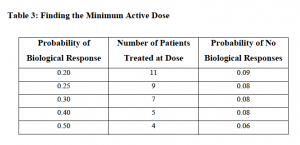
What’s also fascinating, is that in Rubinstein and Simon’s document, they also discuss the idea of “Finding the Minimum Active Dose” as shown in the table below, although I have never seen anyone discuss this in all the cancer conferences I have been to over the last 20 years!

Should we use minimally effective dose in cancer research

Thus, if we were to reconsider the whole concept of higher dosing in favour of minimally effective dosing, then we might actually see better adherence and compliance on a broad scale and therefore, better outcomes for more people.

If we then add in the growing trend to combine two TKIs or a TKI and monoclonal, whether approved or as a novel-novel combination, a fresh approach to testing drug combinations rather than different MTDs starts to look more appealing.

Just a thought.


4 Comments

I don’t do this very often, but here’s a worthy cause for scientists and cancer researchers to rally around – Dr Steven Meltzer at Johns Hopkins established an online petition to the White House to increase funding to the NIH – the current proposal is to maintain the budget at a flat $30.7 billion.

Supporting the petition taught me something interesting – NIH funding created 350,000 jobs and contributed $50 Billion to the national economy in 2007 alone.

The problem, though, with flat budgets is that every 7 years the value of money halves, so the NIH budget has essentially been decimated over the last decade. This is sad for science, for progress and also for patients.

I was signature 7K odd, but this week has already seen an influx in new supporters that now rank nearly 10.5k strong, which is great progress.  Please take a moment to help support science and research – every vote counts!

Here’s the link to the White House NIH petition.

1 Comment

Many readers will have noticed that the advanced prostate cancer market is rapidly becoming crowded with three new therapies (cabazitaxel, sipuleucel-T and abiraterone) already approved and several more in late stage development, including Alpharadin (radium-223) and MDV3100, both likely to file this year. In addition, others are focused on bone complications, such as denosumab, which is expected to have a tough ODAC meeting this month, and cabozantinib, a multikinase inhibitor currently in phase III trials.

Unlike breast cancer, where progression-free survival (PFS) is a used as a surrogate measure of survival, in advanced prostate cancer, overall survival (OS) has pretty much become the gold standard by which prostate cancer trials are reviewed. This makes it much easier to judge whether the drugs are having a positive effect on true efficacy, i.e. do patients live longer as a result of treatment.  PFS is particularly difficult to measure in prostate cancer, so it’s not surprising this approach has evolved as the standard measurement.

Interestingly though, Health Authority approval does not always mean reimbursement coverage, as NICE showed yesterday in declining to approve abiraterone in the UK on the grounds that it is too expensive. The BBC quoted a patient who had been on abiraterone for only three months, with a positive impact:

“I have my life back. I have a lot more energy and no pain. My quality of life is excellent. I wouldn’t even know I have cancer now, it’s that good.”

The BBC also quoted his wife, who had an excellent point:

“We know NICE has to take a lot of things into consideration, but when you have a terminal illness an extra four months is very precious.”

Source: BBC

Of course, it’s very much a case of balancing available resources with potential benefits and unfortunately, advanced stage patients will inevitably take the lion’s share in terms of budget for disease management. Post EMA approval, some local UK health providers permitted the drug to be used on an individual basis, raising the old contentious issue of the rather unfair post code lottery (zip code for Americans).

Going forward, no doubt there will be much political posturing and pressure, as you can see from Cancer Research UK, who helped fund the research, but hopefully a deal can still be struck between NICE and Janssen, the manufacturer, on price to enable British men broader access to the drug.

One of the things that has struck me lately, though, is how prostate cancer is attracting serious research focus, such that a heterogeneous disease is slowly being more segmented based on the underlying biology of the tumour. Examples include Arul Chinnaiyan’s superb work on the TMPRSS2-ERG fusion gene and Charles Sawyers’ work on the Androgen Receptor.

Thanks to Sawyers work we now know that the old terminolgy ‘androgen independent’ prostate cancer is an incorrect way of descibing advanced disease because as Clegg et al., (2012) described Scher et al’s original research findings in 2005:

“Despite administration of androgen-depleting therapies, continued androgen receptor (AR) signaling is a common feature of CRPC, attributed to AR gene-amplification, AR gene mutation, increased AR expression or increased androgen biosynthesis in prostate tumors.”

In other words, the AR is very much an oncogenic driver of the tumour’s survival.

This week, we saw promising data for MDV3100, an AR antagonist in the post chemotherapy setting but what of the pipeline beyond abiraterone and MDV3100?

Previously, we came across Aragon’s ARN-509 AR antagonist, which is much further behind in phase I/II clinical trials. Sawyers and Michael Jung, the co-inventors of MDV3100 while at UCLA also developed (along with several other scientists) additional AR compounds, the most promising of which became ARN-509. Aragon is a privately held company formed out of the UCLA discovery with the intent of developing and commercialising this compound.

The obvious question arises – is it a ‘me-too’ or potentially better than MDV3100?

Preclinical data has just been published in Cancer Research by Clegg et al., (2012) addressing this issue. They argued that, based on their findings:

“In a clinically valid murine xenograft model of human CRPC, ARN-509 showed greater efficacy than MDV3100.”

Of course, preclinical data doesn’t always translate to the clinical setting, but my first reaction was ‘Whoa!’

Let’s take a look at the agent in more detail.  ARN-509, like MDV3100, is a pure antagonist of the androgen receptor, unlike bicalutamide (Casodex), which has both agonist and antagonist properties.  The idea behind this is that there will be less resistance and greater therapeutic potential for more comprehensive binding with the receptor.

We know from work in Sawyers lab that MDV3100 targets splice variants, which have been shown to cause resistance in CRPC, but we don’t yet know how ARN-509 will fare on that front.

So why did Clegg et al., (2012) suggest that ARN-509 might be superior to MDV3100?

“Maximal therapeutic response in this model was achieved at 30 mg/kg/day of ARN-509, whereas the same response required 100 mg/kg/day of MDV3100 and higher steady-state plasma concentrations.

Thus, ARN-509 exhibits characteristics predicting a higher therapeutic index with a greater potential to reach maximally efficacious doses in man than current AR antagonists.”

In other words, it’s much more potent and has a greater therapeutic index; these things are important clinically. It also has a longer half-life:

“ARN-509 exhibits low systemic clearance, high oral bioavailability and long plasma half-life in both mouse and dog, supporting once-daily oral dosing.”

Androgen deprivation therapies are more commonly used in castrate-sensitive disease, so this begs the question of whether there is anti-androgenic activity in the non-castrate setting:

“At higher doses of 30 mg/kg/day, robust tumor-regression (>50% reduction in starting tumor volume) was observed in 6/8 ARN-509-treated animals, similar to regressions observed in mice castrated on the day treatment initiated.”

The promising results led the researchers to conclude that:

“ARN-509 is a next generation anti-androgen selected for pre-clinical and clinical development based on its efficacy and pharmacodynamic profile in mouse xenograft models of CRPC.”

They also stated that:

“Unexpectedly, given a similar in vitro profile, ARN-509 is more efficacious per unit dose- and per unit steady-state plasma-level in mouse models of CRPC than MDV3100.”

In other words, ARN-509 is a next generation AR antagonist with a good efficacy and PK profile in mouse xenograft models of CRPC.  It’s clinical development, although further behind abiraterone and MDV3100, will be well worth watching over the next few years.

In summary…

While there has been a lot of activity in the advanced prostate cancer market lately with new approvals making a difference to the lives of men with prostate cancer, there are also several other promising near term agents in development, as well as some potentially more potent and effective treatments in early clinical development.  What we have seen to date is merely the beginning of new advances in R&D.

The early and advanced prostate cancer markets are likely to see some significant changes over the next 24 months, as new products based on rational drug design and an improved understanding of the biology of the disease make it to market.

More on prostate cancer coming soon!

All this new data is very timely, considering on Monday I’m off to the AACR Special Conference on Prostate Cancer, jointly chaired by Drs Chinnaiyan and Sawyers.  I’ll be interested to learn what new events are emerging as biological targets and what factors can help us predict response to treatment.  If you’re going to this meeting do stop and say hello, it’s always good to meet new people in the field.

References:

ResearchBlogging.orgClegg, N., Wongvipat, J., Tran, C., Ouk, S., Dilhas, A., Joseph, J., Chen, Y., Grillot, K., Bischoff, E., Cai, L., Aparicio, A., Dorow, S., Arora, V., Shao, G., Qian, J., Zhao, H., Yang, G., Cao, C., Sensintaffar, J., Wasielewska, T., Herbert, M., Bonnefous, C., Darimont, B., Scher, H., Smith-Jones, P., Klang, M., Smith, N., de Stanchina, E., Wu, N., Ouerfelli, O., Rix, P., Heyman, R., Jung, M., Sawyers, C., & Hager, J. (2012). ARN-509: a novel anti-androgen for prostate cancer treatment. Cancer Research DOI: 10.1158/0008-5472.CAN-11-3948

Scher, H. (2005). Biology of Progressive, Castration-Resistant Prostate Cancer: Directed Therapies Targeting the Androgen-Receptor Signaling Axis Journal of Clinical Oncology, 23 (32), 8253-8261 DOI: 10.1200/JCO.2005.03.4777

3 Comments

Greetings from the frigid cold of Texas Hill Country! It’s 38F and a little nippy here at the San Antonio Breast Cancer Symposium (SABCS), brrrr! Later this morning, I will be recording my premeeting video but the outdoor Riverwalk filming has been sadly cancelled due to the inclement weather. However, I will post a synopsis of my hot topics and main highlights that I plan to be covering at this event.

In the meantime, for those of you following remotely, you can follow the conversations and join in the discussion around progress in breast cancer on Twitter using the hashtag #SABCS. To make it easy to read all the tweets, you can use the widget below to see what’s going on – tweets will start in earnest this afternoon with the main sessions.

It’s not often that you wake up to really exciting news in the cancer field, but that’s what happened this morning with Medivation’s announcement on the interim analysis of their androgen receptor (AR) antagonist, MDV3100:

“As reported by the IDMC, MDV3100 produced a 4.8-month advantage in median overall survival compared to placebo.

The estimated median survival for men treated with MDV3100 was 18.4 months compared with 13.6 months for men treated with placebo. MDV3100 provided a 37 percent reduction in risk of death compared to placebo (Hazard Ratio=0.631).

The IDMC further determined, considering the observed safety profile, that MDV3100 demonstrated a favorable risk-to-benefit ratio sufficient to stop the study.”

The 4.8 month improvement in OS in post-chemo setting is superior to that previously reported for abiraterone (Zytiga), which had a 3.9 month advantage over placebo and received regulatory approval in the US and EU earlier this year.

This is great news for patients, for Medivation and also for Charles Sawyers at MSKCC who originally invented the MDV3100 compound. If you are interested in the MDV3100 story, you can read my interview with Dr Sawyers posted earlier this year.

There are several points to note about these results:

  • MDV3100 does not require concomittant steroid therapy as abiraterone does, this is huge for urologists who as surgeons do not generally want to manage side effects.
  • Given the excellent results in the post chemotherapy setting, I would expect the survival advantage in the pre-chemotherapy session for both therapies to be more than 6 months.
  • Ultimately, as hormone therapy, I can see the real advantage for MDV3100 being as a more potent and complete inhibitor of the AR than bicalutamide, so there is a huge potential for MDV3100 as ADT therapy in the earlier stages of disease.

With regards to filing, Medivation announced that:

“Medivation and Astellas plan to hold a pre-NDA meeting with the U.S. Food and Drug Administration (FDA) in early 2012 and will provide an update on regulatory timelines for MDV3100 subsequent to that meeting.”

At this rate, I would expect to see MDV3100 approved sometime in 2012.

The future is looking very bright indeed for patients with advanced prostate cancer – these new therapies offer the potential with sequencing to extend lives significantly.

2 Comments

.

“Scientists at Dalhousie University in Nova Scotia have identified a key mechanism of metastasis that could lead to blocking tumor growth if their findings are confirmed.”

AACR press release

Loved this opening to an AACR press release about a key paper (freely available for anyone to download – see the reference session below) that was just published in Cancer Research by David Waisman’s group.

Now, before getting into the technical details, I was reflecting recently on both my recent awesome trip to the MD Anderson basic research campus at Smithville, Austin where a lot of research into tumorigenesis is conducted and pointed questions from patients about why their hasn’t been enough progress in treating and curing metastatic breast cancer.

There are several obvious reasons for this:

  1. We need to understand more about the basic mechanisms underpining function, never mind work out what role various proteins have and how they interact in health and disease before we can even think about clinical progress.
  2. As we learn more about the basic process of tumorigenesis, so we can start to apply those findings to clinical research and translational medicine in developing better predictive biomarkers that are clinically meaningful.
  3. If we have excellent biomarkers, an understanding of the processes and the targets involved, thus we should have clearer targets that suggest more logical combinations to treat disease and essentially slow or even undo the process of metastasis.

Quite frankly, based on the little we really know about the underlying biology of advanced disease, I’m sometimes surprised the results are as good as they are. That’s not to say we’re doing great, becasue clearly there is a lot of improvement that can be made, but sometimes we should stop and look at how far we’ve come and ask serious questions about what we really need to know now that can help progress things?

With all that context in mind, the current published research from Phipps et al., (2011) is worth looking at because it advances our thinking a little more. In the past, people have focused on cancer cells, thinking they were the main thing that mattered. What’s interesting about this research is that it shows how important other cells, such as macrophages, are in the tumorigenesis process:

“There is an increasingly large body of evidence correlating tumor-associated macrophage (TAM) density with poor prognosis in a varied number of solid tumors.”


Source: wikipedia

We also know from basic research that macrophages are critical in driving tumour growth, invasion, and metastasis.  Macrophages are like the Pacmen of cells – think of them moving around the blood stream chomping things in their wake.  The thing is, there are always macrophages in tumours – so how do they get from the bloodstream to the tumour?

The current paper details the key role that the macrophage cell surface protein, S100A10, plays in mediating macrophages, thereby allowing them to move to the site of tumour growth. This process is obviously essential to tumour development and angiogenesis.

What also struck me though, was the research also detailed what happened in animals without the S100A10 protein:

“Growth of murine Lewis lung carcinomas or T241 fibrosarcomas was dramatically reduced in S100A10- deficient mice compared with wild-type mice.

Emphasis mine.

What does all this data mean?

In order to either slow or stop metastasis in its tracks, we need to understand the whole process better, thereby finding the weaknesses and chinks in the tumour.

These results clearly show the important role that S100A10 has in facilitating macrophage activity.

Now, S100A10 is a protein and proteins often (but not always, since some of them are currently thought to be undruggable) make very good targets for therapeutic intervention.

Of course, these results clearly need to be reproduced and confirmed by other groups, but if confirmed, they potentially give us some targets to aim at. For example, we could either look at blocking the macrophages in some clever way or target the S100A10 protein directly with a rationally designed targeted therapy. These apparoaches might potentially slow, or even stop, tumour growth.

What if we found some strategies that were effective?  Maybe we could take the approach further and actually use it as a prevention strategy in high risk patients to actually prevent the development of metastasis occurring?

Time will tell, but personally, I was rather heartened by the this wonderful piece of research this morning.

References:

ResearchBlogging.orgPhipps, K., Surette, A., O’Connell, P., & Waisman, D. (2011). Plasminogen Receptor S100A10 Is Essential for the Migration of Tumor-Promoting Macrophages into Tumor Sites Cancer Research, 71 (21), 6676-6683 DOI: 10.1158/0008-5472.CAN-11-1748

“Ipilimumab is not recommended for the treatment of advanced (unresectable or metastatic) malignant melanoma in people who have received prior therapy.

The Committee was satisfied that ipilimumab meets the criteria for being a life-extending, end-of-life treatment and that the trial evidence presented for this consideration was robust.

The Committee acknowledged that few advances had been made in the treatment of advanced melanoma in recent years and ipilimumab could be considered a significant innovation for a disease with a high unmet clinical need.

Despite the combined value of these factors the Committee considered that the magnitude of additional weight that would need to be assigned to the QALY gains for people with advanced (unresectable or metastatic) melanoma would be too great for ipilimumab to be considered a cost-effective use of NHS resources.”

NHS NICE Guidance

In other words, it’s too expensive and the NHS doesn’t want to pay the £80K ($120K) sticker price. This news is no great surprise given the cost-benefit ratio when considering that there is no way to tell who might benefit most from treatment upfront.
The is, however, a huge difference between hope and false hope, as NPR Shots astutely noted when discussing Avastin in breast cancer earlier this week and in some ways that sentiment applies here too. By this I mean it would be much more compelling to both patients and NICE if an oncologist could talk about a new therapy in specific and useful terms.

Examples of doctor-patient conversations about treatment in the near future might look more like this….

Either:

“You have an 70-80% chance of responding to this therapy because you have X (mutation, translocation, biomarker etc), where this drug has been shown to be highly effective and extends life by over 2 years in many of our advanced patients with this disease to date.”

Or:

“This drug may do more harm than good in your case, as it has been shown to effectively target X (mutation, translocation, biomarker etc), which you do not have, and therefore, are unlikely to respond. I believe it would be better to consider these alternatives in your situation… “

We all know about heterogeneity – it’s the very underpining of what makes a cancer survive despite our best efforts to tame it until we can subset into more homogenous and predictable groups.  This means that offering a broad therapy to all patients with a given advanced cancer without any idea of its predictive value is fast becoming a misnomer in today’s world of emerging targeted therapies.  Now, manufacturers (marketers even) might think it’s better not to ‘limit’ their market opportunity, but the reality is many healthcare systems are looking at ways to limit treatments to where it’s needed most, not only for cost reasons, but also to direct resources where they are more likely to work. The current model is not sustainable in the long run.

Of course, if a predictive biomarker was available to determine which patients are more likely to respond to ipilimumab, then the QALY calculation would be considerably different, and possibility even within the realms of the current guidelines.

That’s a whole different ballgame, but hopefully one that will begin to emerge as we have seen with new targeted therapies such as vemurafenib (Zelboraf) in BRAF V600E malignant melanoma, crizotinib (Xalkori) in ALK-positive advanced lung cancers and everolimus (Afinitor) in combination with exemestane in ER/PR+ HER2- breast cancers that have relapsed after initial aromatase inhibitor therapy.

It will be interesting to see how NICE handles all of those situations in the future, since they are all targeted agents showing a significant impact on a patients ability to live longer,with a more precise, and therefore, limited patient definition.  As a Brit and a scientist, I may have reasonable expectations that NICE will make a rational and logical decision in the face of limited resources, but this is also tinted with a large dose of healthy scepticism after the trastuzumab (Herceptin) debacle in HER2-positive breast cancers that lead to the utterly ridiculous and unfair post code lottery in the UK.

We are not talking absolute costs here, but the relative costs of seeing real efficacy benefits of six months or more in those patients most likely to respond, while at the same time giving an offering that truly extends life in a meaningful fashion without exposing too many to the toxic side effects of a given treatment. Dealing with cancer is tough enough without being treated with a regimen that had absolutely no hope of helping people live longer and feel better.

The other day I highighted the phase II data from the T-DM1 (trastuzumab emtansine) trial as one of my top four abstracts at the ECCO European Multidisciplinary Cancer Conference (#emcc2011) in Stockholm.

For those of you interested in ADC technology, I wrote about the fascinating concept previously, if you want to check it out.

I think T-DM1 is a really exciting development for several reasons, so let’s take a look at the study in more detail.

  1. T-DM1 is an antibody drug conjugate (ADC), which combines the trastuzumab monoclonal antibody with a cytotoxic agent, maytansine, via a linker. This new molecule is stable and allows the structure to hold together until it reaches the cancer cells, wherein the chemotherapy is released in a much more targeted fashion than giving chemotherapy and Herceptin as separate drugs by infusion. With the traditional approach, it means that the chemotherapy will target normal cells as well as cancer cells, leading to significant side effects, including cardiotoxicity.
  2. ADC technology is designed to allow the combination to be delievered more specifically to the tumour, while also potentially reducing the side effects for patients.
  3. In this study (TDM4450g), T-DM1 was compared with the standard of care, trastuzumab (Herceptin) plus docetaxel in women with HER2+ metastatic breast cancer who had been previously untreated ie first-line therapy.
  4. It should be noted that maytansine is a very powerful cytotoxic that was originally seen as too toxic when given by traditional infusion. Combining it as an ADC therapy, however, reduces some of the associated adverse events since it can now given in a more localised fashion where it is most needed, ie in the tumour itself.

One of the challenges with the T-DM1 trial, though, as Martine Piccard, the Discussant correctly pointed out, is the open label design. One must be careful in interpreting data from them, as Kaufman et al., (2007) observed:

“Placebo controlled, double-blind trials can reduce bias when efficacy is studied. Open label designs can falsely suggest efficacy and fail to uncover harmful effects. Placebo controlled trials are considered ethical when there is no standard treatment better than placebo, and when participants are informed about the use of a placebo.”1

Unless a trial is blinded, we can never completely be sure the patients weren’t selected to either arm without bias, even if unconscious. Now, I’m not saying that was the case here, merely that one must be aware of both the limits and potential possibilities.

That said, my least favourite studies are open label single arm trials, but that wasn’t the case here, since half the women were randomised to receive the standard of care, ie trastuzumab plus docetaxel, making it a good comparison to see if any improvement can be attained. However, a double blind placebo controlled (in place of docetaxel) randomized trial is always a more reassuring design than an open label one.

That said, unlike pills, it is much harder to give chemotherapy blinded because the dosing is calculated as per kilogram of body weight, a dead giveaway. Thus, T-DM1 is given as 3.6 mg/kg, while the trastuzumab dose is given per 6 mg/kg, whereas docetaxel (75 or 100 mg/m2) versus placebo can clearly be be more easily blinded.

We must also remember that this is an exploratory phase II trial designed to see whether there is an efficacy signal or not. The study endpoint was PFS. Phase III trial designs are often much more robust.

What do the results show?

The proof of the pudding is ultimately in the analysis, not the theory, though.

The good news is that Dr Sara Hurvitz (UCLA) presented data that was actually much better than I expected, which is very heartening to see. Usually, in metastatic disease, where there is a very high disease burden, we sadly see increments of ~2 months or less in many investigational agents, so anything more than that is a real standout.

In the TDM4450g trial, the efficacy and tolerability results were impressive:

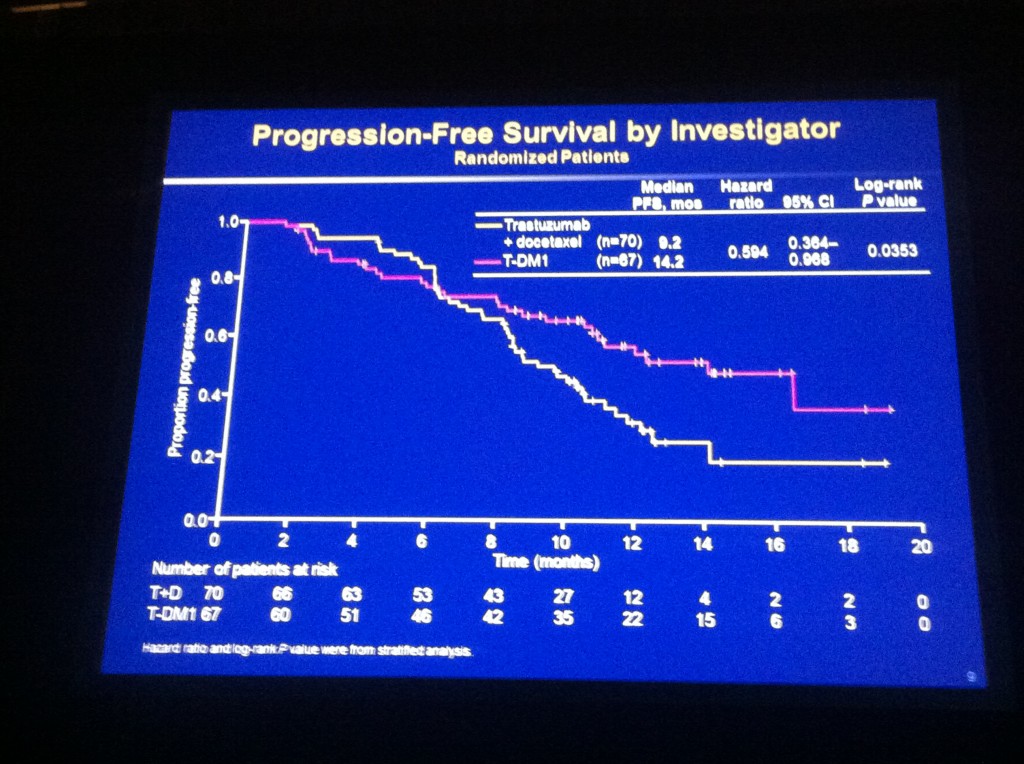
  1. Patients lived a median of five months longer without their disease worsening ie the median progression free survival (PFS) was 14.2 months vs. 9.2 months (HR=0.59, P=0.035) in favour of T-DM1 over the standard of care.
  2. Note: any HR under 0.60 is scarily good news – that means a huge 41% reduction in the risk of the disease worsening or death was seen.
  3. Overall survival had not yet been reached at the time of the presentation in the T-DM1 arm, another good sign that the data are likely to be durable.
  4. Women in the T-DM1 arm generally experienced fewer adverse events compared to those who received Herceptin plus chemotherapy: the rate of Grade 3 or higher adverse events was reduced by nearly half (46.4% vs. 89.4%).
  5. In addition, more women on Herceptin plus docetaxel discontinued therapy due to side effects compared to T-DM1 (28.8% v. 7.2%).

Here’s a snapshot of the PFS curves – you can decide for yourself what you think:

PFS in Phase II T-DM1 trial versus trastuzumab plus docetaxel

So far, so good.

However, in the interests of fair balance, there were some side effects that appeared more in the T-DM1 arm, namely:

  • Thrombocytopenia (30.4% v. 6.1%)
  • Increased liver enzymes such as aspartate transaminase (AST) (39.1% v. 6.1%)

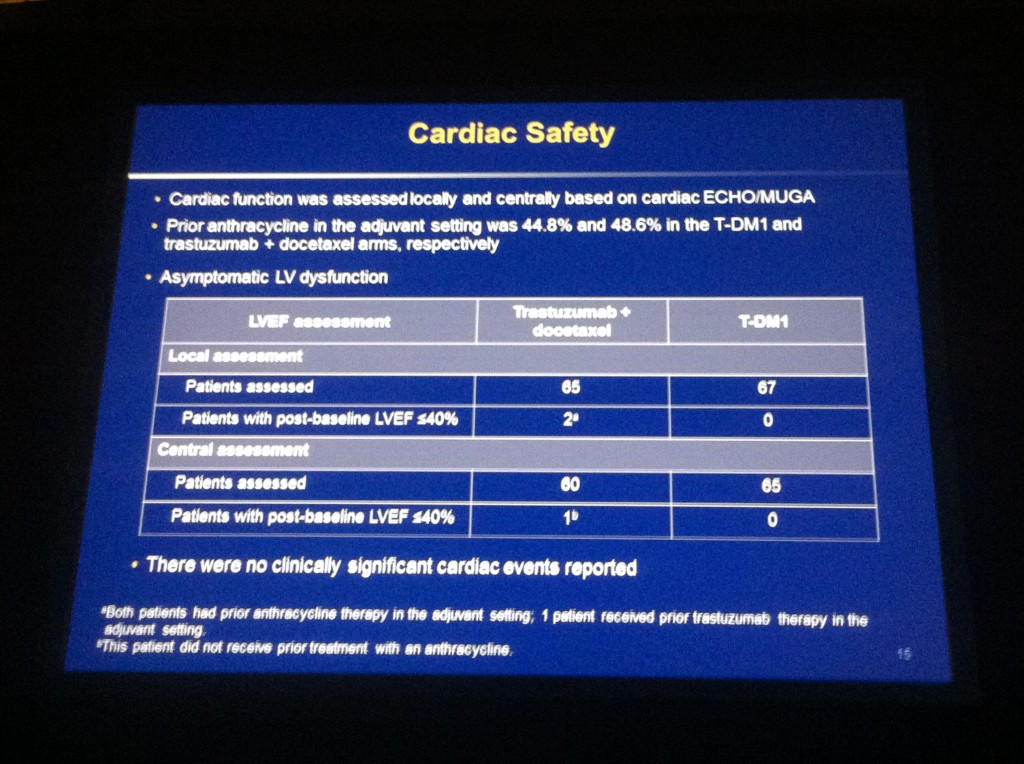
The most significant adverse event for me though, was cardiotoxicity, which is a well known side effect of standard Herceptin plus docetaxel therapy. Here’s how that data looked at the time of the analysis:

Cardiac toxicity in Phase II T-DM1 HER2+ metastatic breast cancer study

As you can see, it was less in the T-DM1 arm than the standard of care, which is most encouraging.

Patient sentiments are important

I did a quick search to see what patients in the trial were saying and came across these two heartfelt posts I encourage you all to read – it will put your day into perspective. Participating in clinical trials is not a bed of roses by any stretch of the imagination and I salute these brave women in their fight:

In conclusion…

These data from the phase II T-DM1 versus trastuzumab plus docetaxel study are an excellent start, with promising efficacy and safety signals in favour of the ADC over standard of care.

The big unanswered questions are whether the overall survival (OS) will also be better (I really hope so) and whether the data is reproducible in a large scale phase III trial (ditto). We will have to wait a while to see the more extensive phase III trial results.


  1. Kaufman et al., (2007) Issues in SMA clinical trial design The International Coordinating Committee (ICC) for SMA Subcommittee on SMA Clinical Trial Design http://www.columbiasma.org/docs/news/Kaufmann%20Muntoni%20Trial%20Design.pdf 
1 Comment
error: Content is protected !!