Pharma Strategy Blog

Commentary on Pharma & Biotech Oncology / Hematology New Product Development

Posts tagged ‘lung cancer’

Recently, I came across an exciting new development in a Nature publication and couldn’t resist teasing my Twitter followers with this terse statement:

Naturally, this mischievous tweet set off a lot of folks frantically trying to guess what I was referring to and the @replies came in thick and fast.

The National Science Foundation defines transformative as:

“Transformative research involves ideas, discoveries, or tools that radically change our understanding of an important existing scientific or engineering concept or educational practice or leads to the creation of a new paradigm or field of science, engineering, or education.  Such research challenges current understanding or provides pathways to new frontiers.”

Many suggestions came hurtling in, most related to a drug or company, but actually what I was referring to was a transformative technology – the biggest clue was in the question 🙂

Bispecific antibodies, to be more precise.

I was completely inspired by an article by a group of scientists in Nature Biotechnology by Speiss et al., (2013) – the link is included in the references below and is well with reading. It’s one of those things you read and think, “Wow, wish I had thought of that!”

Genentech kindly gave me access to one of their scientists involved, Dr Justin Scheer (gRED), who explained the rationale behind their approach and what they hope to do with this technology.  More on that in a moment, but first it’s a good idea to understand where I’m coming from.

Let’s take a look at both the potential and limitations of the various types being developed as cancer therapeutics, and the basics underpinning monoclonal and bispecific antibodies in more detail.

What are monoclonal antibodies?

Essentially, a monoclonal antibody is a manufactured molecule that’s engineered to attach to specific defects in cancer cells. They mimic antibodies the body naturally produces as part of the immune system’s response to invaders.

The immune system is trained to attack foreign invaders in the body, but it doesn’t always recognize cancer cells as enemies because they are formed from massive proliferation of the body’s own cells i.e. not foreign, unlike bacteria and viruses.

Monoclonal antibodies are usually directed to attach to certain parts of a cancer cell. An easy way to think of it is that the antibody ‘marks’ the cancer cell and makes it easier for the immune system to find and destroy.

How do monoclonal antibodies work?

The majority of currently available monoclonal antibodies are monospecific, i.e. having a single specific target e.g. CD20 or CD19, for example. The classic example in oncology is rituximab. Rituximab attaches to the CD20 protein found on B cells, which is associated with some types of lymphomas. When rituximab attaches to CD20, it makes the lymphoma cells more visible to the immune system, enabling them to be attacked and destroyed.

Treatment with rituximab lowers the number of B cells, including healthy B cells. The body will produce new healthy B cells to replace them and ensures that the cancerous B cells are less likely to recur.

While results with this approach have been impressive in some cases, there are limitations because cancer is highly complex and more than one target may be need to be addressed. This means that drug combinations are needed, increasing the complexity of clinical trial design especially in dose finding and MTD studies, risk of added or overlapping toxicities, increased costs etc.

Monoclonal antibodies such as rituximab have some other limiting factors though, as Speiss et al., (2013) observed:

“They lack natural Fc regions, they cannot bind to the neonatal FcRn receptor; binding to FcRn delays antibody clearance and improves pharmacokinetic (PK) properties.”

The lack of an Fc region also means that monoclonal antibodies typically cannot activate T-lymphocytes – because this type of cell does not possess Fc receptors – so the Fc region cannot bind to them.

A new potential solution exists

Antibodies that target two antigens are known as bispecific antibodies. Only one is currently available commercially (catumaxomab, Removab) and binds to CD3 and EpCam, although there are several in late stage development, including blinatumomab (Amgen) in ALL. The latter is interesting because it is part of the new generation of antibodies known as bi-specific T-cell engagers (BiTEs).

A bispecific monoclonal antibody (BsAb) is a manufactured protein that is composed of fragments of two different monoclonal antibodies and consequently binds to two different types of antigen.

Manufacturing a monoclonal antibody, while more complex than an oral tyrosine kinase inhibitor (TKI), is easier than a bispecific antibody. Much of the limitations seen so far with bispecific antibodies have been technological rather than clinical. What the Genentech scientists set out to do is succinctly described by Dr Scheer in the short Soundcloud below:

What are the advantages of bispecific antibodies?

The main advantage of bispecific antibodies is the ability to combine a cytotoxic cell (e.g. CD3) or ADC with a tumour specific protein target (e.g. CD19 or CD20) although a number of different combinations could be considered. In other words, you would get the ability to home in on the specific tumour target together with enhanced cell killing.

This could be a potent combination, except that technology-wise, they are difficult to engineer as Speiss and colleagues noted:

“… bispecific-antibody design and production remain challenging, owing to the need to incorporate two distinct heavy and light chain pairs while maintaining natural nonimmunogenic antibody architecture.”

There are some technological difficulties in engineering bispecific antibodies, though.  Blinatumomab was mentioned as one example by Speiss et al., (2013) because:

“… some bispecific antibody fragments (e.g., the anti-CD19-CD3 single-chain fragment blinatumomab) are expressed as a single polypeptide chain they include potentially immunogenic linkers.”

What was fascinating about the Nature Biotech paper was that they reported on a new process they had developed to manufacture bispecific antibodies:

“We present a bispecific-antibody production strategy that relies on co-culture of two bacterial strains, each expressing a half-antibody.  Using this approach, we produce 28 unique bispecific antibodies.”

One thing I thought was particularly cool about this novel approach is that bacteria are easier to manipulate and having a foreign component in the antibody will potentially mean that the human body’s immune system will hopefully pick it up more easily. Essentially, these new chemical structures could act as a powerful cancer homing device against specifically chosen targets.

The example used in the paper was a new bispecific antibody they engineered from co-cultures of EGFR and MET. Remember that Genentech/Roche already has a TKI against EGFR (erlotinib) on the market and a MET antibody (onartuzumab) in development. Neither of these drugs hit both targets and yet as Speiss and colleagues noted:

“MET and EGFR drive the growth of a marked proportion of non-small cell lung cancer tumors. MET and EGFR are often co-expressed and co-activated, and MET signaling can compensate for loss of EGFR signaling and vice versa.”
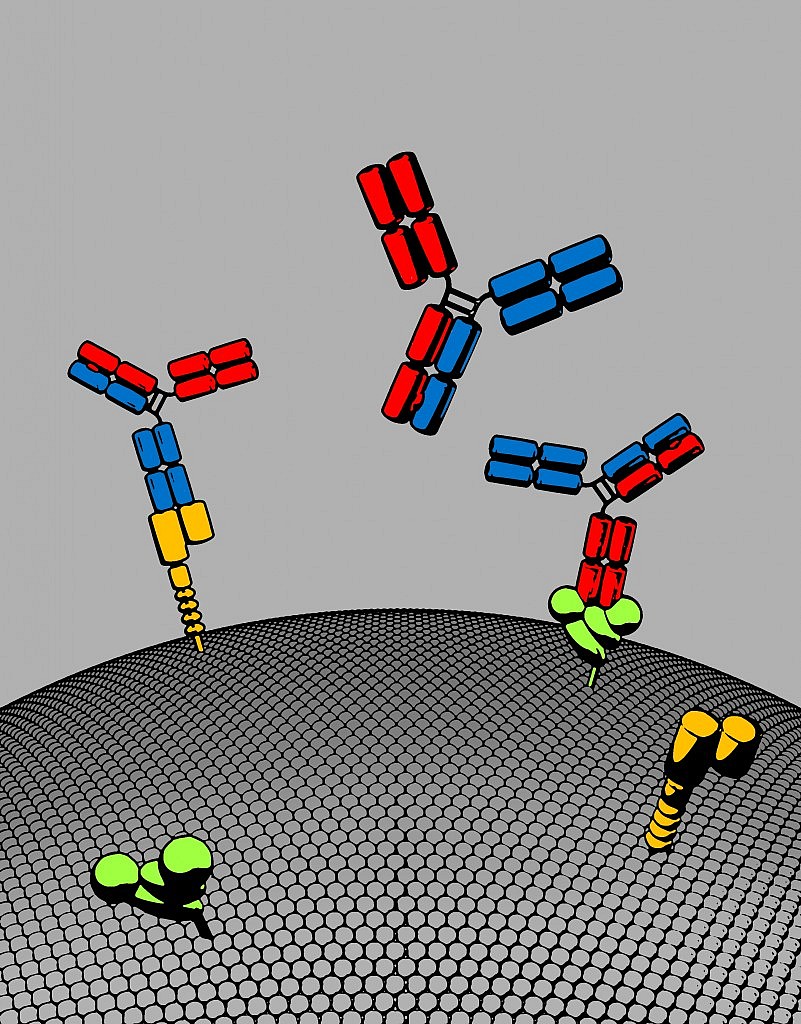
Image Courtesy of Roche's gRED unit: Bispecific antibody with two distinct binding arms that inhibits both MET (orange) and EGFR (green). The bispecific antibody, shown here in red and blue, has a natural antibody architecture

Image Courtesy of Roche’s gRED unit: Bispecific antibody with two distinct binding arms that inhibits both MET (orange) and EGFR (green). The bispecific antibody, shown here in red and blue, has a natural antibody architecture

As Dr Scheer observed, we don’t know yet is where the company will go with this exciting technology, but if the approach shows promising efficacy in future clinical trials, then it’s easy to see how multiple new bispecific antibodies could be easily developed for different tumour types, with far more potency and utility than single targeted therapies alone.

Stop and think about that possibility for a moment.

Transformative science isn’t always about finding a new target, sometimes the breakthrough is in removing the technological limitations to create a much more robust platform with enormous therapeutic potential.  At that point, the biology, targets and imagination become the limitations, not the technology itself.

I have a feeling that this platform is a much more exciting breakthrough than many realise – it’s the sort of approach where you can see, to paraphrase a famous watch company’s ad – some day all antibodies will be made this way.

References:

ResearchBlogging.orgSpiess C, Merchant M, Huang A, Zheng Z, Yang NY, Peng J, Ellerman D, Shatz W, Reilly D, Yansura DG, & Scheer JM (2013). Bispecific antibodies with natural architecture produced by co-culture of bacteria expressing two distinct half-antibodies. Nature biotechnology PMID: 23831709


It’s that time of the year when the annual meeting of the American Society of Clinical Oncology (ASCO) hurtles around with alarming speed out of nowhere and everyone in Pharmaland goes, “ASCO, what already? Is it really June?!” Suddenly the month becomes the focus for many frantic hives of activity.

Immunotherapy

The last two years have seen some unprecedented changes in new therapies emerging to treat several different tumour types, both liquid and solid.  One of the new trends that has begun to emerge is the new class of immunotherapy agents called checkpoint regulator inhibitors.  These include:

  • CTLA-4 (ipilimumab)
  • PD-1 (nivolumab and lambrolizumab)
  • PD-L1 (RG7446)
  • OXO-40 inhibitors (more about those in another post).

This year at ASCO brings forth a lot of new data from the four compounds mentioned. In the video preview we have also attempted to explain how these antibodies work and why they are an important development beyond melanoma. There are data in several tumour types including melanoma, RCC and head & neck cancer at Chicago. In the recent thought leader interview with Dr Robert Motzer (MSKCC), he mentioned PD-1 as a hot topic to watch out for in renal cancer. However, I’m particularly looking forward to seeing the lung cancer data, which has the potential to be really stunning.

In this year’s ASCO video preview, we have included some graphics and an MOA video explaining how these immunotherapies are thought to work. Check it out below!

CLL

Another area that I’ve been watching for a while is chronic lymphocytic leukemia (CLL), which has languished a little in the shadow of it’s CML cousin. Not for long though!

There are a lot of exciting developments here beyond Pharmacyclics BTK inhibitor, ibrutinib. These include new CD-20 antibodies such as Roche’s GA-101 (obinutuzumab) and SYK inhibitors (whatever happened to fostamatinib, one of the hematology highlights of the 2010 ASCO?) where Gilead are now developing an early compound, potentially for combining with their PI3K-delta inhibitor, CAL-101, now known as idelalisib.

In addition, Infinity also have a PI3K-delta inhibitor, although they are further behind in development. We don’t know yet whether greater in vivo potency will translate to the clinic or whether also targeting gamma will add to the efficacy or introduce off-target kinase toxicities.  Either way, it’s good to see so many targets and exciting new agents being explored for this disease.

Breast and Lung Cancers

On the solid tumour front, I was delighted to see new data in HER2+ breast cancer and ALK+ lung cancer.  Interestingly, in both of these cancers, Pfizer and Novartis in particular are making inroads with a number of compounds including everolimus (Afinitor), palbociclib (PD-0332991) a selective inhibitor of cyclin dependent kinases (CDK) 4 and 6, LDK378 and PF-05280014, a trastuzumab biosimilar.

Pancreatic Cancer

My final topic that has some interesting developments is pancreatic cancer.  Since the phase III Abraxane data from the MPACT study was presented at ASCO GI, Celgene have filed with the FDA and received Priority review, with a PDUFA date of September 21st.  An update is expected at ASCO, along with tumour marker data and prognostic biomarker data.  Threshold are presenting their phase III study design for TH-302 in the Trials in Progress section, but given the standard of care may well have changed by the time the data is mature, this may well be a day late and dollar short.

All in all, a good year can be expected for new data emerging at this year’s ASCO.

You can learn more about these topics, including insights on how PD-1 and PD-L1 immunotherapies work from the video highlights by clicking on the image below:

ASCO 2013 Preview Video

My ASCO preview video was freely available for several months but is now part of Biotech Strategy Blog Premium Content.


2 Comments

On the final day of the annual 2013 meeting of the American Association for Cancer Research (AACR) in Washington DC, Jeffrey Engelman (MGH) hosted an excellent plenary session on “Cancer Evolution and Resistance” with a series of superb talks not only from himself, but also Neal Rosen (MSKCC), Todd Golub (Broad Institute) and René Bernards (Netherlands CI).

If this session is included in the webcast, I would highly recommend watching the whole thing several times, as it was one of the meeting highlights for me. Despite being on the very last day, the large hall was pretty packed and well worth waiting for. You can check availability of the AACR 2013 webcast talks here.

I’m going to focus on some of the specifics in NSCLC from Engelman’s talk for this update.

Where are we in the quest to improve outcomes in lung cancer?

Jeff Engelman, courtesy of MGH

Jeff Engelman, courtesy of MGH

Engelman discussed the basics of what we know about adaptive resistance to TKI therapy in solid tumours – most of them (EGFR and ELM4-ALK in lung, BRAF in melanomas, HER2 in breast, and cKIT in GIST) typically being in the range of 8-11 months, with only GIST seeing an impact for nearly 2 years (20 months).

Thus we can see that the resistance develops over time as mutations and amplifications in the tumour evolve in adaptation to the initial efforts to inhibit the target. Indeed, approx. 50% of EGFR lung cancers develop the T790M mutation, while ~33% of resistant ELM4-ALK cancers show new mutations (e.g. L1196M, G1269A and others).

The development of these changes essentially serves as a way to bypass tracks and and continue to allow downstream signalling of PI3K and MEK to occur, thereby driving growth and cell survival. What then happens is a myriad of other pathways become activated to help drive signalling, for example MET, HER2/HER3, IGF1R etc in EGFR driven cancers and EGFR and cKIT amplification in ALK lung cancers.

As an analogy, think of this process like a road traffic system – if the route into New York from New Jersey was cut off at the Holland Tunnel, so traffic would increase to the Lincoln Tunnel or Verrazano Bridge and if those were cut off, traffic would then flow onto the George Washington Bridge, as it adapts and seeks new escape routes from the original destination.

Eventually, the cancer evolves further with defects in growth arrest and apoptosis, as seen with transformation from NSCLC to SCLC in some patients with EGFR cancers, and even changes in the microenvironment through epithelial mesenchymal transition (EMT) and loss of BIM.

The key question is what can we do about overcoming or delaying resistance?

One strategy would be to evaluate more potent inhibitors e.g. LDK378 instead of crizotinib in ELM4-ALK cancers. Another might be to explore logical combinations to address shutting down the bypass tracks. A third might be to add in a new inhibitor to target the specific mutations that evolve e.g. T790M inhibitor in the case of EGFR driven cancers when it appears.

Some of these trials are already underway and we should have more data soon.

Another way, as we saw with the last post on metastatic melanoma, is to identify mechanisms of resistance using laboratory models and lab specimens. This approach can potentially lead to more rational drug development in the clinic. Traditionally, scientists have induced resistance in mice, looked for the mechanisms (a process that can take 1-2 years), validated them in lab samples of patients, and then treated with a new treatment strategy.

This process is obviously time consuming though and not every patient can wait that long for the answer. Engelman then explained how they are looking at ways to streamline the process in Boston. After the mouse resistance experiments are completed, they have added in a drug combination screen to look for logical treatment strategies i.e. what can be added to the original drug to overcome resistance?

A very elegant example was given for EGFR lung cancer where they evaluated 78 test drugs in a screen with and without gefitinib to determine those which led to cell death. Other examples were given for ELM4-ALK cancers.

The screen results suggested that most of the resistant models produced 3-6 hits. These might include adding a MET inhibitor to an EGFR inhibitor in EGFR mutant cancer, an EGFR inhibitor in MET amplified cancers and a SFK inhibitor in the case of ELM4-ALK cancers, for example.

These results are still early, but they do look very promising. Validation studies are still needed, but early studies they performed suggested that the hits are indeed showing efficacy in vivo.  A preclinical example for this concept was shown in vivo by adding ABT-263 (Bcl2 inhibitor) to gefitinib and seeing first a rise in tumour growth with the EGFRi and then a large drop in volume when either ABT-263 or AZD6244 (MEK) was added.

Based on the exciting initial concepts in animals, they are now moving to patient derived models since next generation sequencing (NGS) can help identify the mechanisms of resistance and combined with the drug combination screens, we may see more individual level treatments for patients on a case by case basis.  These might be based on large scale (over 100 cell lines) testing derived from resistant biopsies to identify effective combinations and match them to the relevant biomarkers.  It sounds easy and obvious, but few centres are doing this in practice.

This is true personalised medicine in action.

It is also pretty exciting to me as we know that cancer, even in different patient tumours, is very heterogeneous and requires a more personalised rather than a one size fits all approach. As Engelman observed,

“Heterogeneity of resistant clones within individual patients may pose additional challenges to overcome resistance.”

The second half of his really excellent talk focused on the use of sequential biopsies in patients to explain the heterogeneity and how it can lead to transformation from NSCLC to SCLC and back again in response to treatment with an EGFR inhibitor. That’s an in-depth discussion for another day though, but suffice to say it was a fascinating topic.

And finally…

I can see these novel and applied techniques eventually moving very fast and adopted in top level Academic centres where they have the resources and knowledge to marry basic and translational research with clinical practice in early stage trials, but for many Community or even regional Academic physicians, this will be virtually impossible without referral of patients to clinical trials in the Academic centres, at least for now.

Ultimately, we will see more improvements in treatment for lung cancer when we figure out not only the targets, but also how to overcome adaptive resistance, add logical new combinations, and select future treatment based on biopsies as the tumour evolves its response to each line of therapy. Treatment will essentially need to be chosen on an individual patient basis in the long run by evaluating adaptive resistance to each new combination over time.

The idea that we can use mouse models and drug combination screens with sequential patient biopsies to better understand the adaptive response to therapy over time is not new but few have managed to put processes and strategies in place to make this happen in real time. Patients often can’t wait 2 years or more for a new combination trial to open, but the Boston approach is very promising and I’d like to applaud all those at the Boston group (MGH, Dana-Farber, MIT/Broad etc) for their groundbreaking work in this field. Keep your eyes peeled for more updates in this exciting area of research!

Last Friday, Peregrine announced their initial phase IIb results with bavituximab in second line non squamous non-small cell lung cancer (NSCLC). The topline results were most interesting to say the least, since the company suggested that adding bavituximab to docetaxel in second line doubled the rate of survival in these patients. The data was presented by Dr David Gerber (University of Texas, Southwestern in Dallas) at the Chicago meeting of the Multidisciplinary Symposium in Thoracic Oncology in the late breaking session.

What is bavituximab?

Bavituximab is a monoclonal antibody that targets phospholipid phosphatidylsterine (PS), which exists in the membrane of vascular endothelial cells.

In normal conditions, PS is hidden in the inner membrane, but in cancer conditions, the tumour microenvironment can cause the PS cells to also be expressed on the outer membrane. It is thought that chemotherapy can also heighten the PS exposure in the tumour microenvironment, leading to reduced anti-tumour responses.

Bavituximab’s role is to bind to the activated PS on the outer membrane, essentially blocking PD mediated tumour suppression. This is an immune effect, similar to PD–1, whereby it allows the body to recognise the presence of cancer and stimulates it to fight the tumour.

What was the trial design?

The phase II trial randomised patients with non-squamous NSCLC (n=121) to receive one of the following:

1) Docetaxel 75mg/m2 3qw + placebo for up to 6 cycles (n=40)
2) Docetaxel 75mg/m2 3qw + bavituximab 1mg/Kg qw for up to 6 cycles (n=40)
3) Docetaxel 75mg/m2 3qw + bavituximab 3mg/Kg qw for up to 6 cycles (n=41)

Each of the groups then received maintenance therapy ie placebo or bavituximab (1 or 3mg/Kg) until progression.

The primary endpoint of the trial was response rate and the secondary endpoints included PFS, OS, safety and duration of response.

Where were the centres?

Aside from University of Texas Southwestern in Dallas, other US sites included Hershey, several regional cancer centres and a number of community oncology sites, presumably US Oncology. Internationally, the centers included sites in Russia, India and Ukraine.

The trial details can be found in the clinical trials database.

What did the results show?

Based on the company’s press release, the interim data analysis appeared to suggest that adding bavituximab to docetaxel doubled the overall survival from 5.6 months with docetaxel/placebo to 12.1 months in the pooled bavituximab arm.  Each active arm was 11.1 and 13.1 months for 1 and 3 mg/Kg respectively.  I’m not sure that the individual arms were significantly different from docetaxel alone or just the pooled data, which naturally doubles the N number and hence power in determining the difference.  That’s quite a different proposition to start with.

While these results are not unheard of, they require caution for a number of reasons.  We need to remember that they are reminsicent of other, similar small company phase II trials in lung cancer such as Antisoma’s ASA–404, where an increase of 8 months or so in the phase II study was not repeated in a large scale randomised phase III trial. I do think there is enough here from the current bavituximab study to warrant testing the immunotherapy in phase III RCT, but I would urge caution in extrapolating the results at this time.

What are the potential issues with this study?

a) Small phase 2 trials in oncology are fraught with bias, which often disappears when tested on a larger scale in reputable US and EU centers.

b) Not all patients in Eastern Europe are aggressively treated to progression upfront in the same way they are in the US, in other words they may be relatively undertreated, which can influence the subsequent outcome.

c) We don’t have a breakdown by country of the results across groups – did the Eastern EU and Indian patients do better than the US ones? How many patients came from each country that participated and in which arm?

d) It is always tricky to extrapolate from small N numbers of this size, especially when no data for how well the groups were matched in terms of prognostic factors is provided beyond age, performance status etc. There was, howver, a noticeable lower number of caucasians and a higher number of asians in the 3mg bavituximab arm, for example. Would this affect the results? Who knows in a small sample!

e) No mutational analysis was made available – this means more patients with a poorer prognosis could confound the data in the 3 groups and we have no idea why some patients did better than others.

f) The amount of prior Avastin varied across the groups – from 20% (placebo) to 18% and 15% in the bavituximab arms and although not significant in a small sample size, the groups should have been better balanced for this. I would be very wary if these numbers were repeated in a much larger scale trial, especially when considering the bleeding events were higher in the bavituximab 1mg group, which also received more prior Avastin than the 3mg group but a lower number overall any adverse events or grade 3+ events.

g) It’s also difficult to interpret these data in a small sample size, especially when you consider that the toxicities in the docetaxel plus bavituximab 1mg group appear to be better than docetaxel alone. This make little sense to me.

When considering the efficacy data, there are also some other noticeable anomalies:

1) The differences in PFS are small (3.0, 4.2 and 4.5 months) between the three groups but the OS curves show a more dramatic difference. This is normally an obvious red flag – you wouldn’t predict this to happen from the marginal PFS data based on central review.

You can see the OS data as shown on Yahoo Finance:

bavituximab
bavituximab

2) The other odd thing about the PFS data is that at around month 7, the curve for the 3mg bavituximab arm suddenly drops below the 1mg arm and parallels the placebo arm, yet the OS is still better in the bavituximab arm compared with docetaxel alone? Crossover does occur in trials, but it does seem an odd drop and leads me to wonder why and what happened at that point? In addition, with immunotherapy there is usually a delayed effect rather than an upfront effect so one would expect the results in the bavituximab arm to prolong over time if the agent is working effectively.

3) While PFS of 3–4 months for a docetaxel combination is normally acceptable in second line, I would have expected the OS to be longer than 5–6 months for docetaxel alone. It is possible, however, that MOS has not yet reached and these data will improve over time since 10–11 months is a realistic target. If median OS has not yet been reached since this is interim data, then we need to wait and see what the final data will be – with and without bavituximab – since any initial benefit seen before MOS can potentially disappear over time.

Overall:

These data are very early and offer both hints of promise and portends to future doom (ie a negative phase III trial).  Three things I would like to see:

1) Full data analysis with median rather than interim OS for the phase II trial
2) Subset analysis by country and prognostic factors such as mutational analysis
3) Phase III results from a randomised controlled trial involving US and EU academic centres that eliminates inevitable phase II bias

I would also caution readers to avoid extrapolating too far from interim data from small phase II trials based on the Antisoma experience in NSCLC!


Yesterday, I mentioned that some of the best bits of this year’s American Association for Cancer Research (AACR) meeting were the numerous gems in the poster sessions.

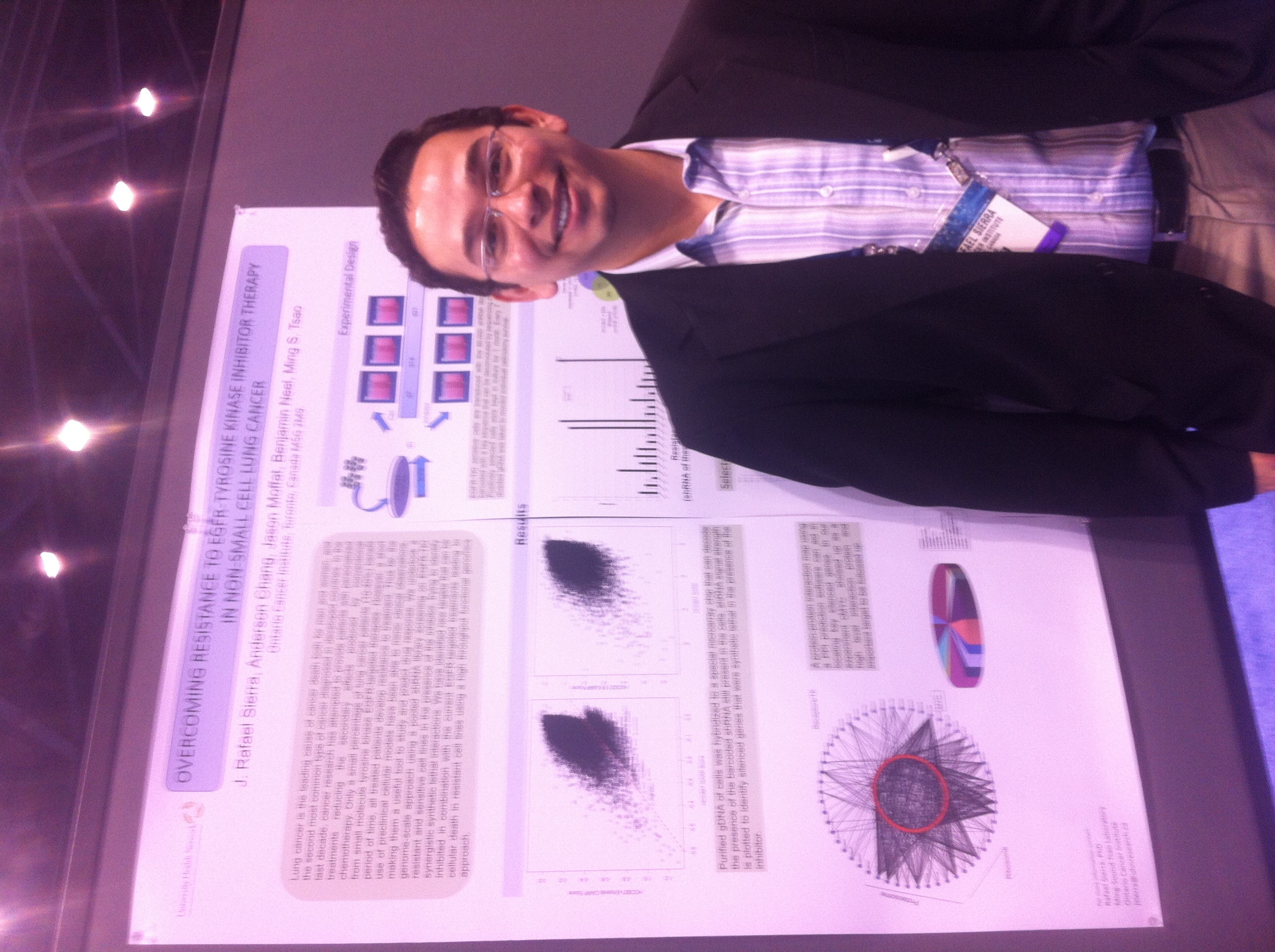
Reuben Sierra, Ming Tsao's Lab (with permission)

One of the coolest such posters I came across was from Ming Tsao’s group.

Specifically, Rafael Sierra (see photo right) was hosting an excellent piece of research entitled: Overcoming resistance to EGFR-tyrosine kinase inhibitor therapy in non-small cell lung cancer.

This is an area of much needed research and breakthroughs.

Why?

Well, at the ECCO meeting in Stockholm last September, Tom Lynch was discussing the role of one such EGFR therapy, cetuximab (Erbitux), in lung cancer and wearily declared prior to presenting a negative study,

“If ever there was a drug desperately needing a biomarker, it’s cetuximab”

because while some of the patients responded beautifully to the drug, many others didn’t and at that time, there was no way to determine upfront who might respond before treating.

This is clearly a waste of valuable resources and time because catch-all studies mean that the number of negative responses can balance out the positive responses in too heterogeneous a population.  That said, if you know what the potential target(s) or biomarker of response are, then you can select patients more precisely for a study and improve the subsequent overall response rates and OS advantage dramatically.

As Sierra et al., pointed out in their poster at AACR, we do know that:

“Patients that present amplification or activating mutations (L878R or exon 19 deletions) of EGFR, have higher response rates. Selection improved response rates from less than 10% to over 60–80%.”

This is very good progress, but how did their research take this concept further?

In this study, the group reported the preliminary findings from a complex study of genome-wide screenings on EGFR resistant cells to try and identify new genes that might mediate resistance and, importantly, be potentially druggable, unlike say, MYC. This would then offer new logical targets for combination therapies to be tested in the clinic in patients to determine if outcomes could be improved.

At the time of the poster presentation, the group had indeed identified a short list of potential candidates (not named as this would be available in a later publication). Conceptually though, this was an elegant study and I really liked the concept.

This morning, I was delighted to see a news snippet from the 3rd European Lung Cancer Conference in Geneva, Switzerland where the ESMO press release noted that Dr Tsao’s group performed:

“An exploratory analysis on the TORCH patient tumor samples that were available for analysis, looking for molecular biomarkers known to be potential predictors of benefit from EGFR inhibitors.”

Despite the biomarker analysis being pre-planned, however, only a third (36%) of samples were available for analysis. It is always harder to do retrospective mutation analysis on small sample sizes unless rigorously collected as per the BATTLE trials.

I’m looking forward to hearing what targets were identified in Drs Sierra and Ming’s research once published or presented in more detail at a future conference, as this may help us move the field forward in terms of rational combinations to either overcome resistance to EGFR therapy (other than the well known T790M mutation) or prevent resistance from developing early.

Now, that would be very cool and I do hope they alert us to the publication in due course – watch this space!

2 Comments

A couple of articles in the latest Cancer Discovery looked at some rather promising, and perhaps a little unexpected, findings pertaining to epigenetic therapy.

What are epigenetics?

If you read up on epigenetics in the medical journals, you will come across some of the most dense and complex articles I’ve ever come across in cancer biology. That said, there are a few readable examples around such as Bird’s (2007) short insight piece in Nature.

Personally, I tend to think of epigenetics – in very simple terms – as changes in gene function that can occur without a change in the sequence of the DNA. This means that we see things such as DNA methylation (where something new is added) and gene silencing (where something important is somehow switched off or lost). A classic change in cancer that often appears in many tumour types is PTEN loss, for example.

As Rodriquez-Paredes and Esteller (2011) noted in their editorial,

“No one doubts that tumorigenesis is a consequence of not only genetic but also epigenetic alterations…

Cancer epigenomes are characterized by global changes in DNA methylation and covalent histone modification patterns.”


What types of epigenetic therapy are there?

While some readers might be vaguely familiar with DNA methylating agents and histone deacetylase inhibitors (HDAC), there are quite a few other types in preclinical development including:

  • histone methyltransferase inhibitors
  • histone kinase inhibitors
  • sirtuin inhibitors
  • microRNA-related compounds

and others, to name a few.

Currently, however, there are a couple of epigenetic therapies that have been approved (eg SAHA or vorinostat), which belongs to the histone deactelyase class of inhibitors (HDAC) indicated for CTCL, while another is the DNA methyltransferase inhibitors (eg azacitadine/Vidaza and decitabine/Dacogen), which are approved for the treatment of MDS and AML, respectively. There are also several other HDACi in development, including entinostat (Syndax), which has shown activity in breast and lung cancers (see Huang et al., 2009 as an example) and panobinostat (Novartis), which is being evaluated in both hematologic malignancies and solid tumours (prostate and melanoma).

Yet what really caught my attention in the paper by Jeurgens et al., (2011) and the accompanying editorial (see references below) was that these two therapy classes are being evaluated in combination for… lung cancer. You likely won’t find HDACs or DNA methyltransferase inhbitors in the top 30 of therapies used for lung cancer at present, but that may change sooner than you think.

Background to epigenetics in lung cancer

To put this story in context, the authors (see Brock et al., 2008) previously identified a potential gene signature for recurrence associated with stage I lung cancer after surgical resection:

“Analysis of DNA methylation in tumors and mediastinal lymph nodes from a series of patients with surgically resected stage I NSCLC defined several prognostic markers associated with rapid tumor recurrence.

Four gene targets of tumor-specific epigenetic silencing, CDKN2a, CDH13, APC, and RASSF1a, were identified as strongly associated with disease recurrence and death, both singly and in combination.

Methylation of any 2 of these 4 target genes in tumor and mediastinal lymph nodes conferred a markedly worse prognosis in patients with stage I lung cancer (P < 0.001), similar to patients with stage III disease.”

As far as I’m aware, to date the clinical data with epigenetic therapies has been reported in hematologic malignancies such as leukemia, lymphoma and MDS. This is the first time we’ve seen some meaningful data in solid tumours.

What about the latest clinical trial in lung cancer?

Jeurgens and colleagues at Johns Hopkins conducted:

“A phase I/II trial of combined epigenetic therapy with azacitidine and entinostat, inhibitors of DNA methylation and histone deacetylation, respectively, in extensively pretreated patients with recurrent metastatic non–small cell lung cancer.
This therapy is well tolerated, and objective responses were observed, including a complete response and a partial response in a patient who remains alive and without disease progression approximately 2 years after completing protocol therapy.”

The NSCLC patients (n=45) were mainly smokers or former smokers (n=40) with primarily adenocarcinoma (n=34) who had been heavily pre-treated (median of 3 prior therapies).

Median overall survival in the entire group was 6.4 months, which compared favourably with the expected 4.0 months in historical controls.

“Four of 19 patients had major objective responses to subsequent anticancer therapies given immediately after epigenetic therapy.”

These responses in a small subset of patients were fascinating – the most dramatic response was seen in one patient who experienced a complete response (CR) that lasted for 14 months. A further 10 people had stabilisation that lasted at least 12 weeks (1 for 14 months and another for 18 months).

Moreover, the four gene signature referred to earlier turned out to be potentially useful as both a prognostic and predictive biomarker:

“Demethylation of a set of 4 epigenetically silenced genes known to be associated with lung cancer was detectable in serial blood samples in these patients and was associated with improved progression-free (P = 0.034) and overall survival (P = 0.035).”

One patient who did particularly well on the combination therapy was subsequently re-challenged with chemotherapy and had such a good response that the nodules in his lungs reduced significantly.  After being diagnosed in December 2006 with stage IV NSCLC, he was still alive and well to tell his astonishing and heartwarming story on the press conference five years later.

Overall, the authors rightly concluded that:

“This study demonstrates that combined epigenetic therapy with low-dose azacitidine and entinostat results in objective, durable responses in patients with solid tumors and defines a blood-based biomarker that correlates with clinical benefit.”

Emphasis mine.

While these results are very exciting, they are also preliminary and will need to be validated in larger scale clinical trials along with the blood biomarkers for clinical response. They do offer a very strong proof of concept for the combination of epigenetic therapy with a DNA methyltransferase inhibitor and an HDAC inhibitor with clear activity in a subset of patients.

What do these results mean in practice?

Personally, I thought these results were absolutely fascinating and offer us a glimpse into the future where we can utilise epigenetic therapies to:

  1. Effectively repair damaged DNA in tumours
  2. Offer low dose therapies with fewer side effects that give a respite from chemotherapy, while doing more good than harm
  3. Enable sensitization of subsequent therapies to improve outcomes
  4. Predict which patients are most likely to respond to epigenetic therapies, while sparing those unlikely to from any systemic side effects

To get a good clinical perspective of what these results mean, I spoke with Dr Jeff Engelman, Director, Center for Thoracic Cancers at Mass General in Boston. He described the data as ‘impressive’:

“I don’t think this is going to impact the practicing oncologist today, but from a scientific stand point, from an oncology development stand point, from a future stand point, it is I think impressive to many of us, to me.

Seeing that epigenetics could have a dramatic effect even on a subset of lung cancers, we’ve never seen epigenetic modulators have such an effect on solid tumors, so it really opens the door that this may be another type of therapy that we will be able to employ for the right patients.  A totally different type of approach.”

He also went on to put the story in a broader context, which I thought was very helpful:

“It is somewhat analogous to the first trials with EGFR inhibitors where had we treated 40 patients with those we would have seen a few great responses.”

“With EGFR, it was given to tons of patients, and there was a subset that responded, and it took a couple of years to find out why. Then all of sudden, boom everything makes sense and we go forward. This feels more like that, we have seen some great responses and now need to figure out why.”

Clearly, the gene signature identified by Brock et al., (2008) in stage I patients needs to be validated in a broader population of patients in clinical trials, but at least it offers a starting point to try and determine which patients with lung cancer might respond to epigenetic therapy. I think Engelman is correct here; once we determine the right biomarkers of response and how often they occur, then patients with lung cancer can be screened and appropriate therapy offered, whether that be EGFR therapy, ALK therapy, or something completely different such as treatment with epigenetic drugs.

The amazing thing is how much progress is being made of late in lung cancer and that’s very good news indeed. I look forward to hearing more about this story and also the other slices or targets as they are identified and the story evolves further.

References:

ResearchBlogging.orgBird, A. (2007). Perceptions of epigenetics Nature, 447 (7143), 396-398 DOI: 10.1038/nature05913

Brock, M., Hooker, C., Ota-Machida, E., Han, Y., Guo, M., Ames, S., Glöckner, S., Piantadosi, S., Gabrielson, E., Pridham, G., Pelosky, K., Belinsky, S., Yang, S., Baylin, S., & Herman, J. (2008). DNA Methylation Markers and Early Recurrence in Stage I Lung Cancer New England Journal of Medicine, 358 (11), 1118-1128 DOI: 10.1056/NEJMoa0706550

Huang, X., Gao, L., Wang, S., Lee, C., Ordentlich, P., & Liu, B. (2009). HDAC Inhibitor SNDX-275 Induces Apoptosis in erbB2-Overexpressing Breast Cancer Cells via Down-regulation of erbB3 Expression Cancer Research, 69 (21), 8403-8411 DOI: 10.1158/0008-5472.CAN-09-2146

Juergens, R., Wrangle, J., Vendetti, F., Murphy, S., Zhao, M., Coleman, B., Sebree, R., Rodgers, K., Hooker, C., Franco, N., Lee, B., Tsai, S., Delgado, I., Rudek, M., Belinsky, S., Herman, J., Baylin, S., Brock, M., & Rudin, C. (2011). Combination Epigenetic Therapy Has Efficacy in Patients with Refractory Advanced Non-Small Cell Lung Cancer Cancer Discovery DOI: 10.1158/2159-8290.CD-11-0214

Rodriguez-Paredes, M., & Esteller, M. (2011). A Combined Epigenetic Therapy Equals the Efficacy of Conventional Chemotherapy in Refractory Advanced Non-Small Cell Lung Cancer Cancer Discovery DOI: 10.1158/2159-8290.CD-11-0271

5 Comments

This morning I was reading a fascinating paper on lung cancer and one of my favourite proteins, CRKL, from the group of prolific lung researchers at Mass General, Dana Farber, MIT and the Broad Institute in Boston:

“Over-expression of CRKL in immortalized human airway epithelial cells promoted anchorage-independent growth and tumorigenicity. Oncogenic CRKL activates the SOS1-RAS-RAF-ERK and SRC-C3G-RAP1 pathways. Suppression of CRKL in NSCLC cells that harbor CRKL amplifications induced cell death.”

Cheung et al., (2011)

We also know that one of the mechanisms of resistance to gefitinib is over-expression of CRKL in EGFR-mutant cells by activating ERK and AKT signaling.

What was interesting about this research was the observation:

“We identified CRKL amplification in an EGFR inhibitor-treated lung adenocarcinoma that was not present prior to treatment.”

Emphasis mine.

We do know that:

  • Adaptive resistance to treatment is a common problem with kinase inhibitors
  • Some lung cancer tumours acquire the T790M mutation, which is known to confer resistance to EGFR therapies
  • Several groups have also reported other known resistance mechanisms may also occur with the EGFR T790M mutation, including MET amplification and CTNNB1 (β-catenin) mutations.

Cheung et al., (2011) tested to see if the PI3K-AKT pathway was specifically involved with CRKL resistance:

“We examined whether treatment with the PI3K inhibitor GDC-0941 suppressed growth of CRKL–over-expressing HCC827 cells in response to gefitinib. Cells were exposed to GDC-0941 alone or in combination with gefitinib. Combined treatment with GDC-0941 and gefitinib resulted in a substantial decrease in the relative proliferation of CRKL–over-expressing HCC827 cells compared to gefitinib treatment alone.”

The answer was yes, activation of PI3K-AKT signalling contributes to CRKL-induced EGFR inhibitor resistance.

It would therefore be very interesting to see what happens in the clinic to a subset of lung cancer patients with CRKL amplification who are treated with an EGFR and PI3K inhibitor to see if this reduces resistance to treatment and improves outcomes. Trials with the combination are indeed ongoing, although I think they are in a more general population of patients with EGFR driven lung cancer. Based on these findings, a subset analysis might prove to be rather instructive here.

What do these results mean?

This study strongly suggests that CRKL may well be a valid therapeutic target:

“These observations show that CRKL over-expression induces cell transformation, credential CRKL as a therapeutic target for a subset of NSCLC that harbor CRKL amplifications, and implicate CRKL as an additional mechanism of resistance to EGFR-directed therapy.”

“Although CRKL amplifications occur in a relatively small fraction of NSCLC, the finding that a similar fraction of NSCLC with translocations involving ALK respond to treatment with crizotinib indicates that targeting genetic alterations present even in a subset of NSCLC may have clinical importance.”

The general idea that CRKL could act as an oncogene in other cancers with CRKL amplifications is also an intriguing idea that needs be explored further.

The paper is very well written and worth checking out for those interested in EGFR mutations, resistance to therapy and development of new therapies.

References:

ResearchBlogging.orgCheung, H., Du, J., Boehm, J., He, F., Weir, B., Wang, X., Butaney, M., Sequist, L., Luo, B., Engelman, J., Root, D., Meyerson, M., Golub, T., Janne, P., & Hahn, W. (2011). Amplification of CRKL induces transformation and EGFR inhibitor resistance in human non small cell lung cancers Cancer Discovery DOI: 10.1158/2159-8290.CD-11-0046

Engelman JA, Zejnullahu K, Mitsudomi T, Song Y, Hyland C, Park JO, Lindeman N, Gale CM, Zhao X, Christensen J, Kosaka T, Holmes AJ, Rogers AM, Cappuzzo F, Mok T, Lee C, Johnson BE, Cantley LC, & Jänne PA (2007). MET amplification leads to gefitinib resistance in lung cancer by activating ERBB3 signaling. Science (New York, N.Y.), 316 (5827), 1039-43 PMID: 17463250

Sequist, L., Waltman, B., Dias-Santagata, D., Digumarthy, S., Turke, A., Fidias, P., Bergethon, K., Shaw, A., Gettinger, S., Cosper, A., Akhavanfard, S., Heist, R., Temel, J., Christensen, J., Wain, J., Lynch, T., Vernovsky, K., Mark, E., Lanuti, M., Iafrate, A., Mino-Kenudson, M., & Engelman, J. (2011). Genotypic and Histological Evolution of Lung Cancers Acquiring Resistance to EGFR Inhibitors Science Translational Medicine, 3 (75), 75-75 DOI: 10.1126/scitranslmed.3002003

3 Comments

“You no longer need to sit through a chicken dinner to watch top oncology researchers run through slides on what’s new and exciting.

This non-small cell lung cancer edition of the Cancer Educators Slide Library allows you to take your iPad to the backyard, sit down in the sunset breeze and watch Drs John Heymach, Tom Lynch, Vince Miller, Tony Mok and course director Dr Roman Perez-Soler spin an amazing decade-long tale of research innovation and discovery that has fundamentally changed clinical practice.”

Amusing openings in emails always grab my attention!

Actually, the program on advances in lung cancer from Research to Practice is well worth watching if you have the time.  I haven’t attended any of their live CME meetings at conferences, but this online one is nicely put together and the slides do look very nice indeed on the iPad.

Check it out if interested in the new developments in lung cancer.

A couple of interesting developments have emerged over the last week with AKT and MEK inhibitors, specifically Merck’s MK-2206 and AstraZeneca/Array’s AZD6244, that are well worth discussing.

  1. At the ECCO/EMCC meeting in Stockholm last Tuesday, Johann De Bono discussed the combination data for MK-2206 and AZD6244 in KRAS driven colorectal cancer.
  2. Later the same week, Array Biopharma announced the initial results from a randomized phase II placebo-controlled study that compared the efficacy of selumetinib (AZD6244/ARRY-886) in combination with docetaxel compared to docetaxel alone in the second-line treatment of patients (n=87) with KRAS-mutant, locally advanced or metastatic non-small cell lung cancer (NSCLC).

Now, to be clear, I like the concept of AKT and MEK inhibitors, especially in select combinations, but the key thing here is the right combinations in the right context.

Let’s take a look at the lung cancer KRAS data first. One of the challenges I have with this approach, is that we’ve know for a while that BRAF and KRAS driven cancers behave rather differently according to Wee et al., (2009):

“Previous studies have found that whereas BRAF mutant cancers are highly sensitive to MEK inhibition, RAS mutant cancers exhibit a more variable response.”

Variable response is not an encouraging phrase when planning clinical trials!

Let’s take a look at the pathway itself:

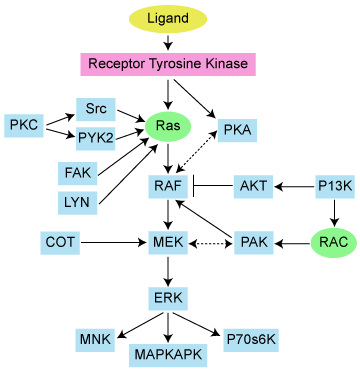
We can immediately see that MEK is downstream of RAS, meaning that even if we target MEK, unfortunately RAS and KRAS is still largely untouched upstream. This is important to remember when considering the actual results later.

The other key factor to consider is what are the adaptive resistance pathways that might evolve as a result of treatment with a MEK inhibitor? In an ideal world, logical combinations would be tested that target both the primary driving mutation or aberration, as well as the adaptive resistance, to try and shut down the pathway more completely than targeting either alone. Another key question that needs to be addressed is what is driving the KRAS aberrant activity in the first place?

We’ve discussed MEK numerous times here on PSB, but the Wee et al., (2009) MEK paper stands out in particular. They identified a critical resistance pathway to MEK inhibition, namely PI3K. Although we discussed this originally in the context of BRAF driven tumours such as melanoma, it is well worth discussing again here in regards to KRAS driven tumours given a MEK inhibitor is being tested.

They observed that:

“Activating mutations in PIK3CA reduce the sensitivity to MEK inhibition, whereas PTEN mutations seem to cause complete resistance.”

It isn’t clear from the Array press release whether any of the patients with NSCLC exhibited PIK3CA mutations or loss of PTEN, but they definiely do occur in this disease. It will be interesting to see of more meta data is available at the forthcoming AACR Molecular Targets meeting next month.

I’m not a big fan of chemotherapy plus a single targeted agent, because as you can see from the evidence above, the pathway is not being shut down by one targeted agent and resistance is not being addressed at all. The chances of such a combination working (by that I mean increasing overall survival), I think would be fairly low.

According to the press release, the study did not see a significant improvement in overall survival (OS) but did show an encouraging response in the form of progression free survival (PFS):

“The key secondary endpoints of progression-free survival, objective response rate, and alive and progression-free at 6 months were all demonstrated with statistical significance, showing improvement in favor of selumetinib in combination with docetaxel versus docetaxel alone.”

Indeed, at the recent AACR and ASCO meetings, there was also some encouraging early signs from Genentech’s PI3K inhibitor, GDC-0941, as a single targeted agent with chemotherapy in NSCLC (a very small early trial), albeit not KRAS specific, but defined more broadly by squamous and non-squamous histology. Thus, all is not lost with the MEK agent yet – if we combined MEK and PI3K inhibitors in NSCLC patients previously treated with chemotherapy, we might have a better chance of succeeding and shutting down the pathway, based on evidence offered from Wee et al’s preclinical research:

“At the molecular level, the dual inhibition of both pathways seems to be required for complete inhibition of the downstream mammalian target of rapamycin effector pathway and results in the induction of cell death.”

As a result, they went onto to suggest a logical treatment approach:

“Our study provides molecular insights that help explain the heterogeneous response of KRAS mutant cancers to MEK pathway inhibition and presents a strong rationale for the clinical testing of combination MEK and PI3K targeted therapies.”

Of course, clinical trials like this always progress incrementally, such that we test a MEK or a PI3K inhibitor alone to determine safety and efficacy activity, then perhaps in combination, which requires another phase I dose finding study to determine the ideal dosages and whether they are too toxic or not combined.

So while either single agent targeted therapy with chemotherapy in and of itself is not a win, there are signs that combining the two may be more appropriate. I would still want to know what is driving the KRAS activity though, given MEK and PI3K are downstream of it. It is entirely possible that a third agent would be needed to shut down the pathway more completely in that patient subset.

At ECCO, De Bono (Royal Marsden) discussed the combination of AstraZeneca’s MEK inhibitor (AZD6244) and Merck’s AKT inhibitor (MK-2206) in RAS mutant colorectal (CRC) and lung (NSCLC) cancers. The results here were not a big win in the former, with 8/15 patients showing no antitumour activity to date.

There are several things we can conclude from the initial data:

  • If we have the right combination for the right target in the right patient subset, then the therapeutic index of the agents is lacking and we need better drugs
  • Are the targets (AKT and MEK) critical?
  • Is something else driving the KRAS activity (see below)*?
  • Are we shutting down the adaptive resistance pathways (escape routes?)
  • Which patient subsets are most likely to respond and how do we best characterise them (ie need more biomarker data)?

And so on… there are always more questions than answers sometimes.

    * Note: This situation could well be similar to BRAF in malignant melanoma, where it is the V600E mutation that is driving the BRAF activity, thus specifically targeting ithe mutation rather than the kinase will have a greater clinical effect than targeting BRAF broadly. In this case, if we really believe KRAS is critical to the lung or colorectal tumour’s survival, then we need to figure out what is driving it before progress is made. Frank McCormick’s elegantly simple wac-a-mole concept for pathway inhibition is very apt here!

No doubt we will see more detailed data and an update soon, perhaps even at the forthcoming AACR Molecular Targets meeting next month.

References:

ResearchBlogging.orgWee, S., Jagani, Z., Xiang, K., Loo, A., Dorsch, M., Yao, Y., Sellers, W., Lengauer, C., & Stegmeier, F. (2009). PI3K Pathway Activation Mediates Resistance to MEK Inhibitors in KRAS Mutant Cancers Cancer Research, 69 (10), 4286-4293 DOI: 10.1158/0008-5472.CAN-08-4765

4 Comments

Pfizer’s Crizotinib (Xalkori) approved in ALK-positive lung cancer!

The FDA just announced that they have approved Pfizer’s crizotinib (Xalkori):

The U.S. Food and Drug Administration today approved Xalkori (crizotinib) to treat certain patients with late-stage (locally advanced or metastatic), non-small cell lung cancers (NSCLC) who express the abnormal anaplastic lymphoma kinase (ALK) gene.

Xalkori is being approved with a companion diagnostic test that will help determine if a patient has the abnormal ALK gene, a first-of-a-kind genetic test called the Vysis ALK Break Apart FISH Probe Kit. It is the second such targeted therapy approved by the FDA this year.

Source FDA

This is wonderful news for those unfortunately affected by this debilitating disease and those yet to be diagnosed with the aberration who will be able to be treated with a new highly specific and targeted drug.

ALK aberrations typically occur in the order of 4-7% of NSCLC patients, depending on sources. No doubt the companion FISH diagnostic test from Abbott will make it easier to screen and identity patients. In turn this will help determine which patients with lung cancer are eligible for treatment.

Pfizer began the rolling NDA submission in January and completed it in May, giving a PDUFA date around November 17th. This rapid approval in approx. three months continues the 2-3 month trend seen with cabazitaxel (Jevtana) and abiraterone (Zytiga) in castration-resistant prostate cancer (CRPC), and vemurafenib (Zelboraf) in metastatic melanoma.

The Xalkori story has been nothing short of amazing and represents another major advance for targeted therapy in a clearly identified subset of patients. There are several patient stories that I’ve come across on the internet, most are heart warming – take a look at this snippet I have curated from ‘feel good’ anecdotes from a caregiver this month alone:

View “Does crizotinib work in ALK+ lung cancer?” on Storify

It’s amazing to follow their story of courage and grace under pressure; it is also very hard to have a bad hair day when the very fragility of human life stares at you in the face. It could be any of us under 50, even non-smokers.

The response rates to crizotinib have been incredible, as witnessed by Dr Jack West’s story about one of his patients at Swedish:

{Update 1: Dr West tells me that the young gentleman he referred to in his TED story has now been on crizotinib 2+ years and is doing well enough to coach soccer!}

In the final PI, the overall response rates for Xalkori in two single arm studies (n=136 and 119) in patients who had mostly received prior systemic therapy. They differed in that:

“In Study A, ALK-positive NSCLC was identified using the Vysis ALK Break-Apart FISH Probe Kit. In Study B, ALK-positive NSCLC was identified using a number of local clinical trial assays.”

The ORR was 50% and 61% for each respectively. This is pretty impressive, in my opinion. According to the PI, the adverse event profile is quite tolerable:

“The most common adverse reactions (≥25%) across both studies were vision disorder, nausea, diarrhea, vomiting, edema, and constipation.
Grade 3-4 adverse reactions in at least 4% of patients in both studies included ALT increased and neutropenia.”

These are fairly normal and commonplace for cancer therapy, although there are potential vision disturbances that may need to be watched (from the PI):

“Vision disorders including visual impairment, photopsia, vision blurred, vitreous floaters, photophobia, and diplopia were reported in 159 (62%) patients in clinical trials.
These events generally started within two weeks of drug administration.
Ophthalmological evaluation should be considered, particularly if patients experience photopsia or experience new or increased vitreous floaters.
Severe or worsening vitreous floaters and/or photopsia could also be signs of a retinal hole or pending retinal detachment.”

The good news is that Xalkori is now available – according to the Pfizer press release:

XALKORI is available immediately through a number of specialty pharmacies.
Patients prescribed XALKORI can call 1-877-744-5675 for assistance accessing the medication.

For more information about the FDA-approved ALK test, call (855) TEST-ALK (837-8255).

The big question many will be asking, though, is what’s the price?

Answer: Price: $9,600/month, putting it in line with similar pricing to Roche’s Zelboraf in metastatic melanoma.

{Update 2: Abbott has also received approved for the ALK test although no information on the cost of the test was provided}.


13 Comments
error: Content is protected !!