Pharma Strategy Blog

Commentary on Pharma & Biotech Oncology / Hematology New Product Development

Posts from the ‘Basic Research’ category

Last week a very interesting article appeared in Cancer Discovery that reported a new target in neuroendocrine tumours (NET) of the prostate, a particularly aggressive subtype. Now, these tumours are “rare” and “uncommon” based on a spot check with a couple of oncology specialists I asked this morning.  In fact, according to this latest research, fewer than 2% of men with prostate cancer actually present with neuroendocrine disease and adenocarcinoma of prostate can also (rarely) evolve into neuroendocrine disease, but overall, the prognosis for NET of the prostate is generally poor.

What did they find?

Rubin and et al., (2011) used next-generation RNA sequencing to profile samples of neuroendocrine prostate cancers or NEPC (n=7), prostate adenocarcinomas or PCA (n=30) and benign (BEN) samples of prostate tissue (n=5) to try and characterise the molecular imprint. Previously, it has been shown by Tomlins et al., (2005) that TMPRSS2-ERG occurs in 50% of prostate NET, which is approximately the same rate as adenocarcinoma of the prostate. The big question is whether other molecular subtypes can be identified?

In this research, it was discovered that the genes AURKA and MYCN were overexpressed and amplified in neuroendocrine prostate cancers (40%) and in prostate adenocarcinomas (5%). The findings were then validated in tumours from a larger cohort of patients (n=37 with NEPC, n=169 with PCA, and n=22 with BEN) using immunohistochemistry and FISH:

“We discovered significant overexpression and gene amplification of AURKA and MYCN in 40% of NEPC and 5% of PCA tumors, respectively, and evidence that they cooperate to induce a neuroendocrine phenotype in prostate cells.”

For those of you interested in the Aurora kinase, here’s what AurA looks like from a broad perspective as part of the cell cycle pathway:

Source: Cell Signal

In order to determine if AURKA was a valid (driver rather than passenger) target, treatment with an aurora kinase (AURKA) inhibitor (PHA-739358, Nerviano Medical Sciences) was evaluated in cell lines and xenografts to determine if the agent inhibited the growth of the neuroendocrine tumours:

“There was dramatic and enhanced sensitivity of NEPC (and MYCN overexpressing PCA) to Aurora kinase inhibitor therapy both in vitro and in vivo, with complete suppression of neuroendocrine marker expression following treatment.”

What do these results mean?

This study has identified new potential targets in neuroendocrine tumours of the prostate in AURKA and N-myc that are well worth evaluating in clinical trials with patients who have this condition:

“We propose that alterations in Aurora kinase A and N-myc are involved in the development of NEPC and that future clinical trials will help determine the efficacy of Aurora kinase inhibitor therapy.”

Interestingly, PHA-739358 (danusertib) has been studied in prostate cancer before without success, but this may be due to the fact that the trial was in patients with adenocarcinomas and not neuroendocrine tumours.

What we learn from this is that the oft heralded argument about targeted therapy – ie first find a valid driver target still holds true – some subsets may respond to therapy while others will not, so identifying the right subset for therapeutic intervention is critical if we wish to increase the chances of success in clinical testing.  While a number of aurora kinase inhibitors have gone by the wayside due to lack of efficacy or excessive toxicities, the good news is that there are still several other aurora kinase A inhibitors in active R&D in addition to PHA-739358, including:

  • MLN8237 (Millennium)
  • AT9283 (Astex)
  • AZD1152 (AstraZeneca)
  • AMG 900, a pan aurora kinase inhibitor (Amgen)

There are probably a few others, but these are the ones I can remember off the top of my head.

Overall, I think these results are very promising indeed, albeit for a small subset of patients with prostate cancer.  That said, it does suggest that another ‘slice of the pie’ has potentially been identified and I look forward to seeing a more precise and well defined clinical trial emerge in the near future in NET prostate cancer to validate the new research findings.

References:

ResearchBlogging.orgBeltran, H., Rickman, D., Park, K., Chae, S., Sboner, A., MacDonald, T., Wang, Y., Sheikh, K., Terry, S., Tagawa, S., Dhir, R., Nelson, J., de la Taille, A., Allory, Y., Gerstein, M., Perner, S., Pienta, K., Chinnaiyan, A., Wang, Y., Collins, C., Gleave, M., Demichelis, F., Nanus, D., & Rubin, M. (2011). Molecular Characterization of Neuroendocrine Prostate Cancer and Identification of New Drug Targets Cancer Discovery, 1 (6), 487-495 DOI: 10.1158/2159-8290.CD-11-0130

Tomlins, S. (2005). Recurrent Fusion of TMPRSS2 and ETS Transcription Factor Genes in Prostate Cancer Science, 310 (5748), 644-648 DOI: 10.1126/science.1117679

Angiogenesis inhibitors have seen a long and rather chequered history since Judah Folkman first propounded the concept that tumours grow by adding new blood vessels. Many of these inhibitors have ended up in the dog heaven scrap heap, so to speak, while others (some monoclonals, some small molecule inhibitors) have made it to market in some indications, but failed miserably in others.  All in all, it’s been a bit of a crapshoot at best for manufacturers trying to crack this particularly difficult nut.

Perhaps the most famous (some would say infamous) drug is bevacizumab (Avastin), a monoclonal antibody to VEGF-A, which has been approved for colon, lung, glioblastoma, renal cancers but just had its approval revoked in advanced breast cancer by the FDA due to a poor risk-benefit and efficacy profile.

Although Vascular Endothelial Growth Factor (VEGF) has been the target most associated with angiogenesis, there are quite a few other pathways involved in the process, including Platelet Derived Growth Factor (PDGF), Placental Growth Factor (PIGF), Fibroblast Growth Factor, Notch, angiopoeitins (eg Ang1-3 and Tie2) and many others.

Recently, at the European Multidisciplinary Cancer Conference (formerly ECCO and ESMO) in September, new data emerged on two new angiogenesis compounds in colorectal cancer, namely aflibercept (VEGF-Trap) from Regeneron and BIBF1120 (Vargatef) from Boehringer. Both drugs showed promising efficacy and tolerability data in a phase III (VELOUR) and a phase II trial, respectively.

I’m not going to go into details of those trials here, but to expand on the idea of angiogenesis further, because it makes logical scientific sense to target several aspects of the process to see if improved outcomes result. Closely related to this is lymphangiogenesis, which is the formation of new lymphatic vessels from pre-existing lymphatic vessels, in a similar way to blood vessel development or angiogenesis.

According to Tobler and Detmar (2006), a simplified angiogenic and lymphangiogenic mechanism is thought to look something like this:

angiogenesis

It was therefore with great interest that I came across Regeneron’s latest poster at the AACR-EORTC-NCI Molecular Targets meeting last week. They looked at the idea of combining aflibercept (VEGF) and (Ang2) to determine whether there was a synergistic effect. The angiogenesis process is described below (courtesy of Regeneron):

VEGFAng2

The answer, in short, was yes.

They found that combined blockade of both VEGF (aflibercept) and Ang2 (REGN910) promoted noticeable tumour necrosis and growth inhibition in colorectal cancer xenografts over either agent alone.

Of course, we don’t know which biomarkers will be useful predictors of response, but that’s a discussion in itself for another post.

Now, while these results are encouraging, it does not mean they will automatically translate to patients in the clinic, but I do think it looks like a promising dual targeting approach that is well worth exploring further.  In the research there appeared to be no obvious signs of additional toxicities with the combination.  This is one specific multi-targeted approach that we may see more of in the clinic going forward. What this space for progress!

References:

ResearchBlogging.orgTobler, N. (2006). Tumor and lymph node lymphangiogenesis–impact on cancer metastasis Journal of Leukocyte Biology, 80 (4), 691-696 DOI: 10.1189/jlb.1105653

2 Comments

For those of you interested in this year’s AACR-EORTC-NCI meeting on Molecular Targets being held in San Francisco this year, you can follow the tweets from the hashtag #aacr in the widget below.

This is one of my favourite meetings of the year. I’m not expecting the same volume of tweets as the annual AACR meeting, mainly because a lot of the data being presented tends to be of an unpublished nature so people tweet those less – I certainly do!

If anyone has any questions, you can tweet me @maverickny. AACR also have an official Twitter and are very helpful.

Heterogeneity remains one of the biggest barriers to progress in clinical research. Triple negative breast cancer is an excellent example of this conundrum as I’ve said many times here on this blog – it’s defined not what it is but what it’s not.  By that, I mean it’s a broad catch-all for all those women with breast cancer who are essentially ER/PR- HER2- but beyond that are likely other subsets yet to be identified or characterised.

That said, once we have a better sense of what those smaller groups are (from basic and translational research) then progress with targeted therapeutics is much more likely. Why? Because by reducing the inherent variability we increase the chances of success with a given target. If you don’t have a valid and well defined target to aim at then the risks of a negative result in large scale clinical trials are much much higher.

We may also see a new subgroup breast cancers emerge defined solely by their ER/PR- status irrespective of the HER gene.  This in itself would be an interesting idea as it lends itself well to the current grouping of patients.

Nature Genetics

This morning’s coffee browsing in Nature Genetics brought up something that piqued my interest greatly – Haiman and colleagues sent in a Letter reporting on a common risk variant for ER- breast cancer associated with chromosome 5P5, i.e. the TERT-CLPTM1L locus.

The essence of their research was given ER- breast cancer tends to be higher in women of African than European ancestry and confers a poorer prognosis, what common risk alleles could be identified? They collated information from genome-wide association study (GWAS) data in women of African (n=1,004 ER-, n=2,745 controls) and European (n=1,718 ER-, n=3,670 controls) ancestry. Here’s what they found:

“The (5P5) variant was also significantly associated with triple-negative (ER-negative, progesterone receptor (PR)-negative and human epidermal growth factor-2 (HER2)-negative) breast cancer, particularly in younger women (defined as less than 50 years of age).”

In addition, they also observed that:

“In combining the results across all studies (6,009 ER-negative cases and 20,708 controls with genotype data), rs10069690 was significantly associated with an increased risk of ER-negative breast cancer.”

What particularly struck me, however, was a little nugget buried deep in the discussion:

“We found no significant association with rs1006960 among ER- and PR-positive cases when stratified by HER2 status.”

In other words, it is the estrogen receptor status that is the defining characteristic. This suggests that not all triple negative women will behave in the same way, so identifying the factors that are important may change our thinking in how to approach patients in the future.

What do these findings mean?

This study is important because it identifies, for the first time, an aberration ie a common variant at the TERT-CLPTM1L locus that is associated with ER- breast cancer that also tended to occur in younger women. As we begin to dig deeper into the molecular biology of ‘triple negative breast cancer’, I use parentheses loosely here as that definition may one day change with more research, we are likely to:

  • Define new subsets of patients who may respond differently
  • Identify possible new targets for clinical trials of rationally targeted agents
  • Smaller trials will be needed for well-defined subsets that have a greater chance of a good response, this in turn makes an accelerated development potentially possible as we saw recently with crizotinib for ALK-positive lung cancer.

I look forward to following the burgeoning research in this area and suspect that we will see many more groups begin to isolate and identify important aberrations that drive the disease and offer new targets for therapeutic intervention.

References:

ResearchBlogging.orgHaiman, C., Chen, G., Vachon, C., Canzian, F., Dunning, A., Millikan, R., Wang, X., Ademuyiwa, F., Ahmed, S., Ambrosone, C., Baglietto, L., Balleine, R., Bandera, E., Beckmann, M., Berg, C., Bernstein, L., Blomqvist, C., Blot, W., Brauch, H., Buring, J., Carey, L., Carpenter, J., Chang-Claude, J., Chanock, S., Chasman, D., Clarke, C., Cox, A., Cross, S., Deming, S., Diasio, R., Dimopoulos, A., Driver, W., Dünnebier, T., Durcan, L., Eccles, D., Edlund, C., Ekici, A., Fasching, P., Feigelson, H., Flesch-Janys, D., Fostira, F., Försti, A., Fountzilas, G., Gerty, S., Giles, G., Godwin, A., Goodfellow, P., Graham, N., Greco, D., Hamann, U., Hankinson, S., Hartmann, A., Hein, R., Heinz, J., Holbrook, A., Hoover, R., Hu, J., Hunter, D., Ingles, S., Irwanto, A., Ivanovich, J., John, E., Johnson, N., Jukkola-Vuorinen, A., Kaaks, R., Ko, Y., Kolonel, L., Konstantopoulou, I., Kosma, V., Kulkarni, S., Lambrechts, D., Lee, A., Marchand, L., Lesnick, T., Liu, J., Lindstrom, S., Mannermaa, A., Margolin, S., Martin, N., Miron, P., Montgomery, G., Nevanlinna, H., Nickels, S., Nyante, S., Olswold, C., Palmer, J., Pathak, H., Pectasides, D., Perou, C., Peto, J., Pharoah, P., Pooler, L., Press, M., Pylkäs, K., Rebbeck, T., Rodriguez-Gil, J., Rosenberg, L., Ross, E., Rüdiger, T., Silva, I., Sawyer, E., Schmidt, M., Schulz-Wendtland, R., Schumacher, F., Severi, G., Sheng, X., Signorello, L., Sinn, H., Stevens, K., Southey, M., Tapper, W., Tomlinson, I., Hogervorst, F., Wauters, E., Weaver, J., Wildiers, H., Winqvist, R., Berg, D., Wan, P., Xia, L., Yannoukakos, D., Zheng, W., Ziegler, R., Siddiq, A., Slager, S., Stram, D., Easton, D., Kraft, P., Henderson, B., & Couch, F. (2011). A common variant at the TERT-CLPTM1L locus is associated with estrogen receptor–negative breast cancer Nature Genetics DOI: 10.1038/ng.985

This morning I was taking a breather from work to catch up on my Science and Nature reading.

Source, Wikipedia: Pyruvate Kinase Muscle isoenzyme

There was a most intriquing Letter to Nature from Lu and colleagues at MD Anderson, describing how PKM2 (pyruvate kinase muscle) may not just have an established role to play in metabolism (via the Warburg effect in glycolysis), but how it may also have important non-metabolic functions in tumour formation and growth:

“Here we demonstrate, in human cancer cells, that epidermal growth factor receptor (EGFR) activation induces translocation of PKM2, but not PKM1, into the nucleus, where K433 of PKM2 binds to c-Src-phosphorylated Y333 of b-catenin.”

In other words, it directly contributes to gene transcription for cancer cell proliferation.

From a scientific point of view, understanding the process of tumorigenesis, ie tumour formation and growth, is critical to figuring out how to stop it.  If we know precise elements of the process, then a more targeted and focused approach can be used in the clinic based on a solid rationale that has a better chance of success.  That’s much more sensible than literally throwing mud at walls randomly and hoping something sticks!

It is well known that EGFR activation and PKM2 expression are instrumental in tumorigenesis, but the question is how and what:

“These findings reveal that EGF induces b-catenin transactivation via a mechanism distinct from that induced by Wnt/Wingless and highlight the essential non-metabolic functions of PKM2 in EGFR-promoted b-catenin transactivation, cell proliferation and tumorigenesis.”

The researchers also went onto to note that:

“PKM2-dependent b-catenin transactivation is instrumental in EGFR promoted tumour cell proliferation and brain tumour development.  In addition, positive correlations have been identified between c-Src activity, b-catenin Y333 phosphorylation and PKM2 nuclear accumulation in human glioblastoma specimens.”

The basis for this idea came from an analysis of samples from tumours of patients with glioblastoma (n=84) who had been previously treated with radiation and chemotherapy after surgery.

They observed that patients who had low beta-catenin Y333 phosphorylation or low expression of PKM2 in the nucleus (n=28 each) had a median survival of 185 weeks and 130 weeks, respectively.

However, median survival decreased for those who had high levels of beta-catenin phosphorylation or nuclear PKM2 expression (n=56 each) to 69.4 weeks and 82.5 weeks, respectively.

Overall, there were a number of important findings, as explained in MD Anderson’s excellent press release describing the work:

“PKM2-dependent beta-catenin activation is instrumental in EGFR-promoted tumor cell proliferation and brain tumor development.

c-Src activity, beta-catenin Y333 phosphorylation, and PKM2 nuclear accumulation are positively correlated in human glioblastoma (GBM) specimens.

Levels of beta-catenin phosphorylation and nuclear PKM2 are correlated with grades of glioma malignancy and prognosis.”

Significance of these results

These results are not only unexpected, they also have some future practical implications, becuase EGFR inhibitors have not proven useful therapeutically in GBM:

  • New biomarkers: c-Src-dependent beta-catenin Y333 phosphorylation levels could potentially be used as a biomarker for selecting patients for treatment.
  • New treatment approaches: Src inhibitors (eg dasatinib, bosutinib, saracatinib) in an appropriately selected patient population most likely to respond, as opposed to allcomer trials, where the inherent tumour heterogeneity hides the positive treatment effect of responders.

This is an important article and well worth taking a few minutes out of your day to read.

References:

ResearchBlogging.orgYang, W., Xia, Y., Ji, H., Zheng, Y., Liang, J., Huang, W., Gao, X., Aldape, K., & Lu, Z. (2011). Nuclear PKM2 regulates β-catenin transactivation upon EGFR activation Nature DOI: 10.1038/nature10598

.

“Scientists at Dalhousie University in Nova Scotia have identified a key mechanism of metastasis that could lead to blocking tumor growth if their findings are confirmed.”

AACR press release

Loved this opening to an AACR press release about a key paper (freely available for anyone to download – see the reference session below) that was just published in Cancer Research by David Waisman’s group.

Now, before getting into the technical details, I was reflecting recently on both my recent awesome trip to the MD Anderson basic research campus at Smithville, Austin where a lot of research into tumorigenesis is conducted and pointed questions from patients about why their hasn’t been enough progress in treating and curing metastatic breast cancer.

There are several obvious reasons for this:

  1. We need to understand more about the basic mechanisms underpining function, never mind work out what role various proteins have and how they interact in health and disease before we can even think about clinical progress.
  2. As we learn more about the basic process of tumorigenesis, so we can start to apply those findings to clinical research and translational medicine in developing better predictive biomarkers that are clinically meaningful.
  3. If we have excellent biomarkers, an understanding of the processes and the targets involved, thus we should have clearer targets that suggest more logical combinations to treat disease and essentially slow or even undo the process of metastasis.

Quite frankly, based on the little we really know about the underlying biology of advanced disease, I’m sometimes surprised the results are as good as they are. That’s not to say we’re doing great, becasue clearly there is a lot of improvement that can be made, but sometimes we should stop and look at how far we’ve come and ask serious questions about what we really need to know now that can help progress things?

With all that context in mind, the current published research from Phipps et al., (2011) is worth looking at because it advances our thinking a little more. In the past, people have focused on cancer cells, thinking they were the main thing that mattered. What’s interesting about this research is that it shows how important other cells, such as macrophages, are in the tumorigenesis process:

“There is an increasingly large body of evidence correlating tumor-associated macrophage (TAM) density with poor prognosis in a varied number of solid tumors.”


Source: wikipedia

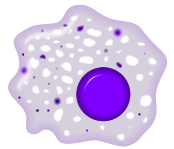
We also know from basic research that macrophages are critical in driving tumour growth, invasion, and metastasis.  Macrophages are like the Pacmen of cells – think of them moving around the blood stream chomping things in their wake.  The thing is, there are always macrophages in tumours – so how do they get from the bloodstream to the tumour?

The current paper details the key role that the macrophage cell surface protein, S100A10, plays in mediating macrophages, thereby allowing them to move to the site of tumour growth. This process is obviously essential to tumour development and angiogenesis.

What also struck me though, was the research also detailed what happened in animals without the S100A10 protein:

“Growth of murine Lewis lung carcinomas or T241 fibrosarcomas was dramatically reduced in S100A10- deficient mice compared with wild-type mice.

Emphasis mine.

What does all this data mean?

In order to either slow or stop metastasis in its tracks, we need to understand the whole process better, thereby finding the weaknesses and chinks in the tumour.

These results clearly show the important role that S100A10 has in facilitating macrophage activity.

Now, S100A10 is a protein and proteins often (but not always, since some of them are currently thought to be undruggable) make very good targets for therapeutic intervention.

Of course, these results clearly need to be reproduced and confirmed by other groups, but if confirmed, they potentially give us some targets to aim at. For example, we could either look at blocking the macrophages in some clever way or target the S100A10 protein directly with a rationally designed targeted therapy. These apparoaches might potentially slow, or even stop, tumour growth.

What if we found some strategies that were effective?  Maybe we could take the approach further and actually use it as a prevention strategy in high risk patients to actually prevent the development of metastasis occurring?

Time will tell, but personally, I was rather heartened by the this wonderful piece of research this morning.

References:

ResearchBlogging.orgPhipps, K., Surette, A., O’Connell, P., & Waisman, D. (2011). Plasminogen Receptor S100A10 Is Essential for the Migration of Tumor-Promoting Macrophages into Tumor Sites Cancer Research, 71 (21), 6676-6683 DOI: 10.1158/0008-5472.CAN-11-1748

Last week things were rather quiet on the blogging front due to slight hiatus while recovering from the recent ECCO meeting in Stockholm and taking a few days off to visit the MD Anderson Cancer Center Science Park in Smithville, Austin. It’s funny, but until I began interacting with one of the PhD students there, Angela Alexander, via Twitter last year, I had no idea the place existed, yet it has been around for 50 years or so!

Austin, Texas

I was invited by the graduate student program (thank you, Alexsandra) to give a talk on ‘alternative science careers’ since after all, not all scientists actually stay in research. My talk was entitled, “On Science, Blogging and Drug development.”

A PhD can be very useful in both the Pharma/Biotech industry and also as a consultant. Biochemistry is particularly handy in oncology new product development, for example.

It has to be said, I had an absolutely fabulous time in Austin from dinner with the students, an enjoyable ride to and from the facility from Lady Bird lake (thanks, Matt!) to a day spent surrounded by a lot of smart and clever people working in basic research on carcinogenesis. The students there, whether doing a PhD or Post Doc, were very impressive indeed.

The fun part for me also included a lovely tour of the facilities in the morning (thanks Alessandra), while in the afternoon there was a superb opportunity to hear what the students were working on as the labs cycled round in groups. Some made presentations of their work, while others talked more informally about what they were working on. Either way, I was engaged by their enthusiasm and dedication. Topics were highly varied and some examples included:

  • Cellular and molecular mechanisms of carcinogenesis
  • Arginine methylation and PRMT
  • DNA damage and repair
  • Chromatin and epigenetics
  • Cancer stem cells
  • miRNA

I also received a delightful informal tour of one of the labs, which was like the Taj Mahal compared to some of the cramped and ancient research spaces I’ve seen elsewhere in the country. It’s amazing to see the woodlands through the big windows with animals running wild outside. It would be hard not to be inspired working here, either from the perspective of the environment, or the sparkling people working there. MDACC have built a very close knit community, which is good to see, especially given that several sadly lost their homes with the recent forest fires in Bastrop. The sense of support within the group was palpable.

There is an ongoing seminar series that includes a wealth internal and external speakers on various science topics associated with basic research – I was particularly excited to see that Arul Chinnaiyan (U Michigan) is speaking next May, for example. Mind you, had I realised beforehand so many distinguished researchers were on the program I might have got cold feet!

It’s important to support not only translational, but also basic research, if we are to develop better targeted drugs in the future. Let’s not forget that the story of the Philadelphia Chromosome, CML and Gleevec took 40 years and several Lasker Awards and Nobel Prizes to go full circle and connect the dots that ultimately made a difference to the lives of patients. Who knows what will happen in the next 40 years as scientists begin to take advantage of the findings from other basic research to piece together the next big puzzle and find the next generation of targeted therapies?

Without solid basic research we won’t even have a target to aim for.

1 Comment
error: Content is protected !!