Pharma Strategy Blog

Commentary on Pharma & Biotech Oncology / Hematology New Product Development

Posts from the ‘Technology’ category

Today, I’m heading off to San Francisco for the AACR Special Conference on Targeting PI3-Kinase and mTOR in cancer.  For those of you needing a brief primer on the pathway, you can find more about it in this 2010 post, which vies with one about ipilimumab in melanoma as the top two posts on Pharma Strategy since the end of October.

You can view the PI3K-mTOR program here.

I’m really excited to be attending this event – a lot of the ‘big guns’ in the PI3-kinase field are speaking at this event, including Lewis Cantley, Jeffrey Engelman, David Sabatini, Carlos Arteaga, Neal Rosen, Gordon Mills and many others.

There are also presentations from scientists at various Pharma and Biotech companies with PI3-kinase inhibitors in development, so it won’t just be about the basic translational research per se, but also about how the R&D is progressing to date with new therapeutics.

If anyone is at the meeting, please do stop and say hello – it’s always nice to meet readers in person – I bumped into a few at last weeks ASCO/ASTRO/SUO GU cancers symposium, for example.

I’ll be tweeting a few snippets from the conference, including tonight’s keynote by Jose Baselga (Mass General Hospital), but excluding unpublished data, under the hashtag #PI3K.  The aggregated tweets from that hashtag will be captured between now and Saturday in the widget below for easy following for those remote and interested in this sub-specialty:

1 Comment

One of the things you can never escape from in modern science is the sheer volume of data that needs to parsed, processed and presented.  One of the things I particularly love about many of our smart clients is that they specifically request “no data dumps” preferring instead to receive relevant strategic insights.  Of course, these take longer to generate, more experience in the subject area and more brain power to produce, but ultimately they also have more value to customers.

Science and data processing

Word Cloud courtesy of Science Magazine

This morning, I was pleased to see that Science magazine are running a very timely overview of data in science in their current issue.  It’s free (with registration to non-subscribers) for those interested in a broad look across multiple science disciplines.

Included in the edition, is an overview of data in climate change, ecology, neuroscience, social science, stem cells and other topics.

Oddly, they haven’t included an article on cancer specifically, although bioinformatics in this area would be particularly fascinating since it is probably far advanced compared to many other life science disciplines in data processing.

Still, there is one on genomics and next generation sequencing that many of you may be interested in, since the article raises some interesting questions, such as:

“The availability of deep (and large) genomic data sets raises concerns over information access, data security, and subject/patient privacy that must be addressed for the field to continue its rapid advances.”

Personally, I love reading Science magazine, and its sister publication, Science and Translational Medicine, as they are usually both chock full of good articles to read on a weekly basis to pass the spare time on trains and planes while travelling to conferences.  I often Instapaper the PDFs for later reading on my iPhone, but you can also read them in the paper magazine or online, depending upon your preference.

Check out the current Science Special Edition on Data and see what you think for yourselves.  By chance, it is virtually a year, almost to that day, that Phil Baumann and a bunch of us Pharma types on Twitter were debating the value of content and process that led to Phil’s excellent summary of the topic on his blog.  Check it out, it’s well worth a read.

References:

ResearchBlogging.orgKahn, S. (2011). On the Future of Genomic Data Science, 331 (6018), 728-729 DOI: 10.1126/science.1197891

Early this morning I saw a headline float by my Twitter stream from yesterday with a link to an article or paper suggesting that yes, we can indeed predict metastasis. I can’t remember who shared it, or what was the exact news article but a quick Google search for latest news found some noise around a potential biomarker, CPE-ΔN. The paper (open access) in the references link below, is from the Journal of Clinical Investigation.

Now, the idea that a biomarker might be able to predict metastasis is important because it signals the need for more aggressive treatment as the disease is advancing. Equally, if someone is doing well, you don’t want to intensify therapy needlessly but resection may be more appropriate.   Clearly, the earlier you detect the cancer, the better, but conversely, figuring out when to change treatment and prevent or slow metastasis is also important.

Reading the paper carefully, the authors stated:

“We report here that the carboxypeptidase E gene (CPE) is alternatively spliced in human tumors to yield an N-terminal truncated protein (CPE-ΔN) that drives metastasis.”

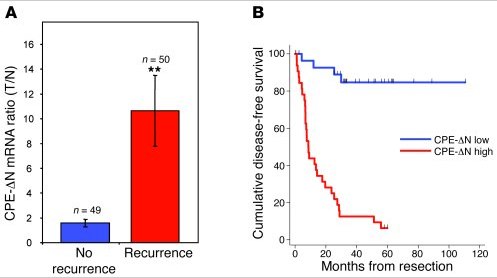
In the research, they used a liver cancer model (or hepatocellular cancer, HCC) to see what was happening with the protein.  Interestingly, CPE-ΔN tended to be present and have high levels in tumours that have metastasised.

They followed a group of patients with HCC (n=99) and looked to determine whether high or low levels of CPE-ΔN was associated with prognosis, with interesting results:

Can cancer metastasis be predicted?

They also looked at patients with stage 2 disease that had only spread within the liver, as well as patients with a rare adrenal disease and colon cancer.  The patients with stage II HCC have a low chance of recurrence, but it can happen, so the question was could the biomarker be used to predict those most at risk?

The answer was yes.

Of the patients with early HCC (n=18):

  • Thirteen had low levels of CPE-ΔN and 10 of those were still cancer-free three years after surgery.   However, three with low CPE-delta N levels did have recurrence, giving an accuracy level of 77% in predicting metastasis.
  • Five had high levels of CPE-ΔN and in four of them recurrence occurred, giving an accuracy level of 90%.

All in all, it’s a good piece of solid research that may have important implications for future research.  Be warned, the paper is a little heavy to read though!

The next steps for the group are:

  1. Find a therapeutic method of blocking CPE-ΔN, preferably with a small molecule
  2. Determine the mechanism by which CPE-ΔN is activated, thereby figuring out how the switching on of metastasis works

All in all, although this research, while still at the very early stage, looks promising and worth following to see how the idea pans out.  I can’t help wondering how this research will impact the Norton and Massagué cancer seeding theory – it should add to it.  Now, if only we can find out what activates the CPE-ΔN protein, thereby triggering the metastasis, that could well be a key piece in the puzzle.

References:

ResearchBlogging.orgLee, T., Murthy, S., Cawley, N., Dhanvantari, S., Hewitt, S., Lou, H., Lau, T., Ma, S., Huynh, T., Wesley, R., Ng, I., Pacak, K., Poon, R., & Loh, Y. (2011). An N-terminal truncated carboxypeptidase E splice isoform induces tumor growth and is a biomarker for predicting future metastasis in human cancers Journal of Clinical Investigation DOI: 10.1172/JCI40433

Since the human genome was sequenced in 2000, much progress has been made with cancer research.  In a review article published this week in the New England Journal of Medicine, McDermott et al., (2011) stated that:

“The identification of an essentially complete set of protein-coding genes, coupled with the discovery of novel transcribed elements such as microRNAs, has fostered an explosion of investigation using array-based approaches into patterns of gene expression in most cancer types.”

In most cancers, histology still drives diagnosis, which I always thought of as a rather crude method of differentiation.  The ones that have begun to advance beyond this?

  • Breast cancer: where expression profiling has led to the identification of different molecular subtypes of basallike, positive for human epidermal growth factor receptor 2 (HER2), normal breastlike, luminal A, and luminal B.
  • Acute and chronic myeloid leukemias, where molecular subtyping helps in diagnosis and also to determine outcomes and in some cases, when to change therapy as new mutations are acquired.

In CML, basic and clinical research may be far advanced in Academic practice on both sides of the pond, but sadly often community clinical practice in the US is lagging in basic routine monitoring of patients with CML in terms of regular cytogenetic and molecular testing to evaluate responses to treatment or acquired resistance developing.  In AML, many molecular subsets have been identified, but we still don’t know which are key drivers or mere passengers.  There is a long way to yet in practical day to day terms.

The impact of the research in breast cancer has demonstrated that different subtypes exhibit very different clinical and biologic features, including patient survival.  Essentially this means taking a very heterogeneous disease and identifying more homogenous subgroups that behave more consistently.  That said, the authors note:

“In routine clinical practice, however, classification is still based on conventional histologic analysis, coupled with immunohistochemical staining for estrogen receptor (ER), progesterone receptor (PR), and HER2, which when combined can reconstruct most of the subclasses defined by mRNA expression.”

Gradually, though, new treatments are evolving for each subtype as well and this will continue to develop as new, more targeted therapies emerge based on a deeper understanding of the biology and how it all fits together.  Systems biology is very much at the heart of breast cancer research.

The review highlighted several areas where advances may emerge:

  1. Prognostic indicators
  2. Optimising use of therapeutics
  3. Development of new therapeutics
  4. Acquired resistance to therapy
  5. Monitoring of disease burden and early recurrence
  6. Genomics in the design of early clinical trials
  7. Susceptibility to cancer

Of course, as the article notes,

“The technologies that are research tools today are primed to become the diagnostics of tomorrow.”

One of the cool things about this article was an interactive graphic looking at the assay of tumor DNA to detect recurrence and early after resection using non-small cell lung cancer (NSCLC) as an example.   Unfortunately, the article appears to be subscriber only, not open access, so if your institution takes this journal I highly recommend checking it out  {HT to Edward Winstead of the NCI Cancer Bulletin, this article is indeed open access for anyone to read}.

I’ll leave you with the final observation from the review to ponder and debate:

“The rapid development of next-generation sequencing technologies seems likely to be transformative. Within a few years, a complete cancer genome sequence will be obtainable for a few hundred dollars or less. As the number of informative genetic abnormalities to be searched for in an individual cancer continues to increase, it may ultimately be more parsimonious to sequence the whole genome rather than do a large battery of directed tests.

However, in order to exploit the full clinical potential of information within the cancer genome, it will first be necessary to incorporate analysis of the genome and transcriptome more widely into clinical trials, generating new and unexpected predictors of drug responsiveness and prognosis.”

References:

ResearchBlogging.orgFeero, W., Guttmacher, A., McDermott, U., Downing, J., & Stratton, M. (2011). Genomics and the Continuum of Cancer Care New England Journal of Medicine, 364 (4), 340-350 DOI: 10.1056/NEJMra0907178

2 Comments

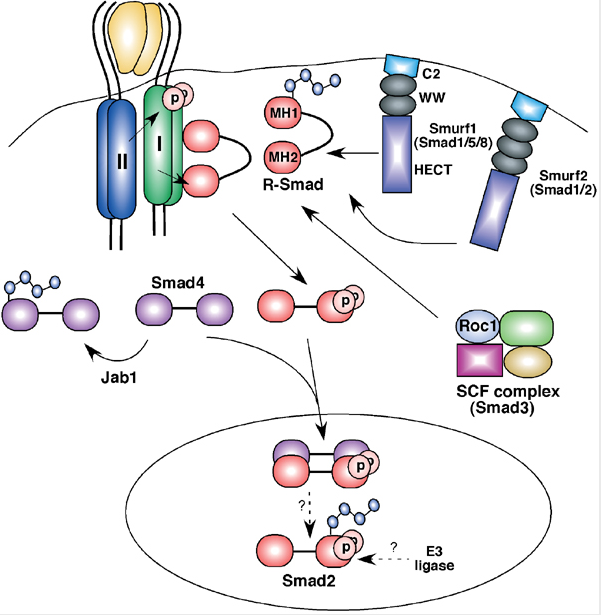
“Ubiquitin-dependent mechanisms have emerged as essential regulatory elements controlling cellular levels of Smads and TGFβ-dependent biological outputs such as epithelial–mesenchymal transition (EMT).

In this study, we identify a HECT E3 ubiquitin ligase known as WWP2 (Full-length WWP2-FL), together with two WWP2 isoforms (N-terminal, WWP2-N; C-terminal WWP2-C), as novel Smad-binding partners. We show that WWP2-FL interacts exclusively with Smad2, Smad3 and Smad7 in the TGFβ pathway.

Interestingly, the WWP2-N isoform interacts with Smad2 and Smad3, whereas WWP2-C interacts only with Smad7. In addition, WWP2-FL and WWP2-C have a preference for Smad7 based on protein turnover and ubiquitination studies. Unexpectedly, we also find that WWP2-N, which lacks the HECT ubiquitin ligase domain, can also interact with WWP2-FL in a TGFβ-regulated manner and activate endogenous WWP2 ubiquitin ligase activity causing degradation of unstimulated Smad2 and Smad3.

Consistent with our protein interaction data, overexpression and knockdown approaches reveal that WWP2 isoforms differentially modulate TGFβ-dependent transcription and EMT.

Finally, we show that selective disruption of WWP2 interactions with inhibitory Smad7 can stabilise Smad7 protein levels and prevent TGFβ-induced EMT.

Collectively, our data suggest that WWP2-N can stimulate WWP2-FL leading to increased activity against unstimulated Smad2 and Smad3, and that Smad7 is a preferred substrate for WWP2-FL and WWP2-C following prolonged TGFβ stimulation.

Significantly, this is the first report of an interdependent biological role for distinct HECT E3 ubiquitin ligase isoforms, and highlights an entirely novel regulatory paradigm that selectively limits the level of inhibitory and activating Smads.”

Source: Oncogene

That was an abstract I was browsing over coffee in my oncology RSS feeds and while it was a bit heavy for early in the day, I was intrigued because Smads have been cropping up in GI sessions at meetings over the last six months or so.  Smads are signal transducers for members of the transforming growth factor-beta (TGF-beta) superfamily, so they occupy a key role in transcription of proteins:

The biology of TGF-beta and Smads

In addition, I’ve included a link to an open access article on the biology of Smads in the references below.

Essentially, the translational research from Soond and Chantry (2011) is suggesting that blocking the WWP2 gene could prevent metastasis, ie cancers from spreading to other organs of the body.  Many of you will remember the post on Norton and Massague’s cancer cell seeding theory and this new finding could well have implications for that research too.

Overall, the latest findings mean that if we have a valid target, we can design a drug to target the rogue gene sending signals.

Of course, these are still very early days yet, but it will be interesting to see if the basic science can be translated into R&D and eventually, a real clinical impact in the long run.

For those of you wanting a simpler version of the abstract, BBC Health did a nice job of putting the research into plain English.  Do check out their short report with pretty pictures here.

References:

ResearchBlogging.orgSoond, S., & Chantry, A. (2011). Selective targeting of activating and inhibitory Smads by distinct WWP2 ubiquitin ligase isoforms differentially modulates TGFβ signalling and EMT Oncogene DOI: 10.1038/onc.2010.617

Attisano, L., & Tuen Lee-Hoeflich, S. (2001). The Smads Genome Biology, 2 (8) DOI: 10.1186/gb-2001-2-8-reviews3010

Izzi, L., & Attisano, L. (2004). Regulation of the TGFβ signalling pathway by ubiquitin-mediated degradation Oncogene, 23 (11), 2071-2078 DOI: 10.1038/sj.onc.1207412

There’s been a lot of noise on the internet from some early adopters who think Really Simple Syndication (RSS) is dead with so much information now available, often shared by people through Twitter and Facebook.  For me, though, that’s not true and here’s why:

  1. It depends on the tool you’re using to consume the RSS feeds
  2. Not many people in my circle share cancer journal items I’m interested in
  3. I use RSS feeds as a searchable database for key information

What tool is useful?

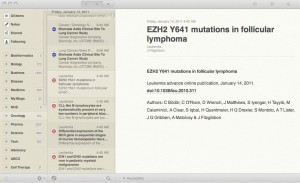
One tool I particularly love is Reeder, which can be used on a Mac computer, an iPad, iPhone or Android device essentially to read your RSS feeds hosted in Google Reader. You can read them online or offline.  This app allows you to skim through the news or science items in a more user friendly way.

Instead of clicking j/k and taking ages to move through items, the layout is much more pleasing and easier to read, like this:

Using RSS to search for interesting or relevant articles:

One of the challenges though, is that some journals such as Nature (in the example above) only provide the title and authors without even an abstract, which is frustrating and more than a little ungenerous of the publisher.

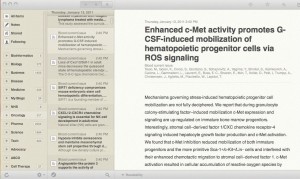
Others such as the Blood journal, however, do provide a useful summary of an article.  I found this one by quickly searching for ROS signaling, for example:

Once, found, it’s easy to star or bookmark for later use.  You can also cut/paste the information or quotes easily to notes or a presentation, adding to the overall utility of the tool.  It’s also a convenient way to search for information, assuming you have input journal RSS feeds into Google Reader, as I have done.  Although time consuming to do, it is well worth the effort in the long run.

Pictures also show up really well in Reeder:

I particularly enjoy skimming, searching and bookmarking my journal RSS feeds while offline on a plane on a laptop as it is a great productivity tool, but this approach would work equally well on an iPad too, which would make flipping through the curated material even more user friendly.

If you have a Mac, iPhone, iPad or Android gadget, then head over here to check it out.

What do you like about RSS?

3 Comments

SpringPad is a new free tool I’ve recently been playing with and it has quickly become a way to sort and organise information easily. In the past, I’ve been a big Evernote fan, but while it is useful for collecting abstracts, photos, papers etc, SpringPad has a whole different set of utilities that I find myself using on a daily basis, both in the office and while mobile at conferences.

One of the challenges in my work is sifting through vast amounts of data and generating useful insights, either for posts here on this blog or as a consultant. I’ve tried a lot of different web 2.0 tools over the last 7 years but occasionally one comes along that sticks in my workflow. SpringPad is one of them.

The first thing I did after signing up was download the iPhone app and the web clipper for Chrome, my preferred browser. This makes life a lot easier when you come across anything interesting:

SpringPad Web Clipper

You can also email items such as webpages, links and PDF files to SpringPad.

Once in the SpringPad web app (similar layouts for the iPhone are available in an app too), your top level notebooks appear something like this:

SpringPad Notebooks

You can colour code them for easy visual appeal and finding things. I’ve also hidden the mission critical client projects, but you can see the general gist of what my recent science topics looks like.

The nice thing about this approach is that you can create Notebooks by topics and then once you’ve clipped or emailed relevant information to SpringPad, it can be organised efficiently.

For example, the JP Morgan Healthcare conference is ongoing this week with lots of useful snippets emerging by company, drug and pathway.   I can clip, then tag the information and also assign it to several Notebooks.  Information emerging from the meeting on Keryx’s perifosine might get added to the Keryx, colorectal cancer and myeloma Notebooks, for example.  This makes it easier to find information later when you search for it, or later look at all the information you have collected to date on say, lung cancer or a particular pathway, to look at the big picture trends. I also diligently tag items across a broad range of topics so they will appear later in the database searches.

Another useful feature of SpringPad is that you can collate information around an event.

Once inside a notebook, for example, the recent one I created for the ISGC meeting at MD Anderson to keep me organised with a one stop shop for all the preconference information, to-dos and post conference notes looked like this:

SpringPad Notebook

While travelling to this meeting, I had everything I needed for the event in the iPhone app and could add new notes, to dos, places, contacts etc while on the road for other projects. This worked really well, even on the plane, since SpringPad will sync the notes once internet access is available later.

The iPhone is small so it is not good for rapidly note taking at meetings and wifi was gippy at best, so I made most of the notes on my Mac laptop in Twitter using a hashtag and also in an offline text app, Notational Velocity, which syncs with Simplenote. I’m now looking to see if I can email my notes on each presentation to SpringPad or worst case scenario, cut/paste them into the notes created. Another way to do this efficiently would be to use an iPad, but that’s still on my wish list in the Gear Notebook 🙂

Assigning dates to To-Dos and items is a really useful feature – you can check your Alert box and see what’s immediately due.

Another feature I like is the ability to import Delicious bookmarks (I have 3,000 of them!) as well as the associated tags, so these are now searchable in the context of any other information I might have collated in SpringPad. When a client rings up or sends an email asking about something, this makes the scientific, commercial or clinical answer much easier to find than Googling and getting lots of spammy results, which seems de rigeur in public searches of late.

There’s a lot more functionality in SpringPad not covered in this review, but I will add more updates as it becomes more familiar and a bigger database is built up. Has anyone else tried SpringPad yet? If so, what were your experiences or do you have any cool tips to share?

9 Comments

One of my favourite journals, Cancer Research, has a new paper available via open access (i.e. free to the public, thank you AACR), which you can obtain from the link in the Reference section below.

It caught my attention because there was a fascinating symposium on angiogenesis at ESMO this summer with some heavyweight debates from Robert Kerbel (accelerated metastasis) and Lee Ellis (normalisation of tumour vessels) taking different viewpoints on the pros and cons of VEGF inhibition.  I took a few photos of the slides for private study and reflection, as they were going too fast for me to keep up with the key points with unreadable chicken scratch notes, but sadly my iPhone went missing in the exhibit hall less than an hour afterwards before I could download the photos :(.  That said, both sides argued with very compelling data for their perspective that I’m not sure which way I roll on the issue.

In this latest paper, di Tomaso et al., from Boston discuss the concept of recurrent glioblastomas and the tendency to relapse after VEGF therapy.  They noted that there are two current theories for how this might happen:

  1. Switch to VEGF-independent angiogenic pathways
  2. Vessel co-option

They therefore decided to investigate these mechanisms in patients with relapsed glioblastoma using a pan VEGF inhibitor, cediranib.  Now, it should be noted that cediranib (Recentin) is not yet approved and is a small molecule inhibitor, whereas another VEGF inhibitor, bevacizumab (Avastin), is a monoclonal antibody approved for relapsed GBM, so I’m sure why they didn’t use that instead.  It does make extrapolation of the findings a little more tricky though, as you cannot always assume a class effect.

Here are the key findings:

  • Endothelial proliferation and glomeruloid vessels were decreased
  • Vessel diameters and perimeters were reduced to levels comparable to the unaffected contralateral brain hemisphere
  • Tumour endothelial cells expressed molecular markers specific to the blood–brain barrier, indicative of a lack of revascularization despite the discontinuation of therapy
  • Cellular density in the central area of the tumour was lower than in control cases and gradually decreased toward the infiltrating edge, indicative of a change in growth pattern of relapsed GBM after cediranib treatment
  • Cediranib-treated GBMs showed high levels of PDGF-C (platelet-derived growth factor C) and c-Met expression and infiltration by myeloid cells, which may potentially contribute to resistance to anti-VEGF therapy

The authors therefore concluded that:

“rGBMs switch their growth pattern after anti-VEGF therapy—characterized by lower tumor cellularity in the central area, decreased pseudopalisading necrosis, and blood vessels with normal molecular expression and morphology—without a second wave of angiogenesis.”

Commentary:

What intrigued me in particular was not the lack of rebound vascularisation effect but the myeloid component.  Many of you will remember the AACR meeting last September on Molecular Diagnostics in Cancer Therapeutics, where AVEO presented data on their VEGF inhibitor in development and found that the myeloid component acted as a useful biomarker of response for tivozanib in renal cell cancer. You can read more about that here if you missed it.

This raises several interesting questions for me:

  1. Is the myeloid marker that AVEO found with tivozanib actually more useful and applicable to VEGF therapies in general?
  2. Does the myeloid component indicate acute inflammation, as we have seen with respiratory and other diseases?
  3. If PDGF and MET expression rise as resistance sets in, does that suggest logical combination therapies for the treatment of GBM?
  4. How can we better overcome the blood brain barrier, which is a physical impediment to improving outcomes.

Time will tell but clearly the research in relapsed GBM has a-ways to go before we figure out how best to approach it yet.

References:

ResearchBlogging.org di Tomaso, E., Snuderl, M., Kamoun, W., Duda, D., Auluck, P., Fazlollahi, L., Andronesi, O., Frosch, M., Wen, P., Plotkin, S., Hedley-Whyte, E., Sorensen, A., Batchelor, T., & Jain, R. (2011). Glioblastoma Recurrence after Cediranib Therapy in Patients: Lack of “Rebound” Revascularization as Mode of Escape Cancer Research, 71 (1), 19-28 DOI: 10.1158/0008-5472.CAN-10-2602

I’m on a lung cancer and systems biology roll at the moment, although partly that’s just how the interesting data rolls in the literature.

Here’s some new food for thought.  A group of respectable scientists published some fascinating data in PLOS Medicine (free article see reference below) entitled, “Nuclear Receptor Expression Defines a Set of Prognostic Biomarkers for Lung Cancer.”

Using PCR, they evaluated NR expression patterns associated with good and poor outcomes in patients with non-small cell lung cancer (NSCLC) and then validated the findings in lung adenocarcinomas (n=550) and squamous cell carcinoma (n=130) samples in three different analyses by comparing normal and lung cancer cells.  Two important factors emerged from the analysis:

“The prognostic signature in tumors could be distilled to expression of two nuclear receptors, short heterodimer partner (SHP) and progesterone receptor, as single gene predictors of NSCLC patient survival time, including for patients with stage I disease.”

The SHP protein was the better predictor of outcomes in patients with stage I disease; those with strong SHP expression had better overall survival rates of approx. 70% at 100 months compared with 45% among people with low SHP expression.  The survival curves in the paper were quite dramatic – check them out.  Interestingly, the same signatures were also predictive of recurrence based on normal tissue samples from the patients with NSCLC.  Progesterone receptor expression was, however, a much weaker predictor of any outcome based on this analysis.

Essentially, this means the study demonstrated:

“NR expression is strongly associated with clinical outcomes for patients with lung cancer, and this expression profile provides a unique prognostic signature for lung cancer patient survival time, particularly for those with early stage disease.”

What are nuclear receptors, you may be wondering?

“The NR superfamily contains 48 transcription factors (proteins that control the expression of other genes) that respond to several hormones and to diet-derived fats.  NRs control many biological processes and are targets for several successful drugs, including some used to treat cancer.”

Still, it’s not something that immediately springs to mind as a possible or logical prognostic biomarker.

That said, out of the 48 transcription factors, two were found to be related to poorer patient outcomes.  They were NGFIB3, a receptor associated with nerve growth factor, and NR3C2, a mineralocorticoid receptor protein:

“This study highlights the potential use of Nuclear Receptors (NRs) as a rational set of therapeutically tractable genes as theragnostic biomarkers, and specifically identifies short heterodimer partner and progesterone receptor in tumors, and NGFIB3 and MR in non-neoplastic lung epithelium, for future detailed translational study in lung cancer.”

Going forward, we still need to see more research to find out whether these particular NRs or others were involved with tumour development and growth.  If  they do, then NR’s may potentially offer new therapeutic targets for future research and development.

References:

ResearchBlogging.org Jeong, Y., Xie, Y., Xiao, G., Behrens, C., Girard, L., Wistuba, I., Minna, J., & Mangelsdorf, D. (2010). Nuclear Receptor Expression Defines a Set of Prognostic Biomarkers for Lung Cancer PLoS Medicine, 7 (12) DOI: 10.1371/journal.pmed.1000378


Recently, at the NY Chemotherapy Foundation symposium, Dr Phil Kantoff from Dana Farber gave a lecture on new therapeutic strategies in prostate cancer. Despite the unsociably early hour (7.30am), the room was almost packed.

While waiting for the session to start, over coffee I had some cheerful banter with some of the oncologists around me.  They expressed a keen desire for more tolerable and effective therapies for their mostly elderly patients with prostate cancer, many of whom were too frail or disinterested to really consider chemotherapy once hormone therapies ceased to work.

Several of them were really interested in, but somewhat puzzled about, the recent spate of new data on hormone therapies (abiraterone) and immunotherapy (sipuleucel-T) and how they work, after all, as one pointed out – after a lifetime of treating thousands of patients with chemo and more recently, targeted therapy – getting their heads around new technologies such as vaccines was difficult and challenging to explain to patients in simple language:

“We know that it works, but how does it work?  That’s what I’m stuck on.”

Another oncologist wondered why does abiraterone appear to work after failure of docetaxel chemotherapy?  He wanted to know if the break from hormone therapy with chemotherapy meant that the androgen receptor (AR) was still driving tumour growth and whether re-treatment with any hormone therapy would actually be beneficial?

Fast forward to Kantoff’s lecture.  He covered the basic ground well and also went through the recent trials, including the recent data from ESMO on abiraterone, the NEJM data on MDV3100 and several trials for sipuleucel-T, including the Small et al., (2006) data and the more recent IMPACT trial in asymptomatic and mild symptomatic metastatic castration resistant disease (CRPC) that showed a 4.1 month advantage over placebo, leading to approval by the FDA earlier this year.

There was some discussion of the survival data, since disease progression, measured as progression-free survival (PFS), may often not be significant, but overall survival (OS) is. Why is this?  Kantoff postulated that the time to the biological effect of sipuleucel-T may take longer than the time of measurement of progression (yes, but why?)  PFS is also a difficult thing to measure in prostate cancer
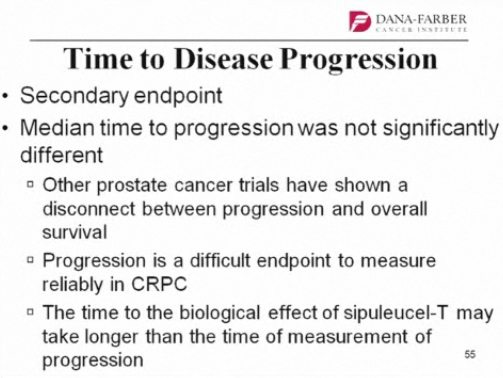
The question for me, though, is what is the mechanism behind the delayed biological effect?  How can this be explained?

In simple terms, vaccines such as sipuleucel-T rely on stimulating the bodies T-cells to fight the cancer.  It doesn’t mean that there will necessarily be any effect on the tumour size, as measured classically by RECIST, but rather the overall impact is inevitably more on immunity effects, which are probably less well understood.  Looking through the recent literature, though, I came across a most interesting article in Clinical Cancer Research:

“Wnt ligands are lipid-modified secreted glycoproteins that regulate embryonic development, cell fate specification, and the homeostasis of self-renewing adult tissues.  In addition to its well-established role in thymocyte development, recent studies have indicated that Wnt/β-catenin signaling is critical for the differentiation, polarization, and survival of mature T lymphocytes.  Here, we describe our current understanding of Wnt signaling in the biology of post-thymic T cells, and discuss how harnessing the Wnt/β-catenin pathway might improve the efficacy of vaccines, T-cell–based therapies, and allogeneic stem cell transplantation for the treatment of patients with cancer.”

We’ve covered Wnt on this blog before, so I’m not going to cover canonical signalling and the delights of Frizzled and Dishevelled in this post, but see here for more background if you’re interested in the biology.  Of relevance to this discussion, though, is a quote from the article:

“… the discovery that Wnt/β-catenin signaling is a key regulator of T-cell immunity now raises the possibility that potentiating Wnt signaling could be used to improve cancer therapies through immune-based mechanisms.”

It will be interesting to see if prostate cancer vaccines such as sipuleucel-T actually have an effect on Wnt signalling, thereby explaining the enhanced T-cell effect.

Wnt signalling has also been shown to have a pivotal role in promoting stem cell self-renewal while limiting proliferation and differentiation (see Staal et al., and Fleming et al., 2008 in the references below).  Inevitably, the biological effects on immunity can take time to take effect compared to the direct effects of say, DNA methylation or angiogenesis, and this may well explain the delay in efficacy with vaccines.  The important thing for men with asymptomatic metastatic prostate cancer is that once it happens, the effect is both prolonged and durable, thereby offering them a new therapy option prior to chemotherapy.

As for the question about re-challenge with existing hormone therapies on the market, I don’t know the answer to that, but it’s a very good question, and perhaps best covered in another blog post unless some of the oncologists reading this have any practical experience to relate?

References:

ResearchBlogging.org Gattinoni, L., Ji, Y., & Restifo, N. (2010). Wnt/β-Catenin Signaling in T-Cell Immunity and Cancer Immunotherapy Clinical Cancer Research, 16 (19), 4695-4701 DOI: 10.1158/1078-0432.CCR-10-0356

Staal, F., Luis, T., & Tiemessen, M. (2008). WNT signalling in the immune system: WNT is spreading its wings Nature Reviews Immunology, 8 (8), 581-593 DOI: 10.1038/nri2360

Fleming HE, Janzen V, Lo Celso C, Guo J, Leahy KM, Kronenberg HM, & Scadden DT (2008). Wnt signaling in the niche enforces hematopoietic stem cell quiescence and is necessary to preserve self-renewal in vivo. Cell stem cell, 2 (3), 274-83 PMID: 18371452

1 Comment
error: Content is protected !!